By Dickson Bandera
Zimbabwe this week took a significant and symbolic step in correcting a long-standing distortion in its liberation history by formally honouring the late Bishop Abel Tendekai Muzorewa and acknowledging his substantive contribution to the struggle for independence.
At a state-sanctioned commemoration of his life in Harare, government leaders made it clear that the Second Republic is deliberately re-examining the liberation narrative to ensure that all contributors to the country’s freedom are accorded their rightful place in history. This process has already seen the posthumous recognition of figures such as James Chikerema and Ndabaningi Sithole, whose roles were for decades marginalised by political contestations rather than historical fact.
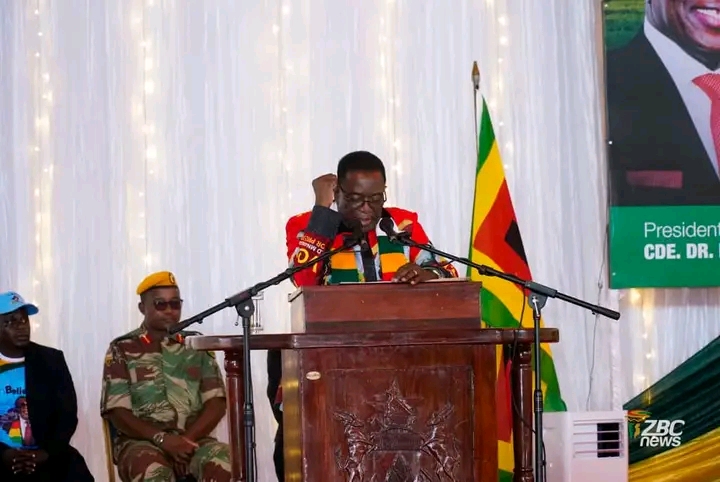
Speaking at the commemoration, Minister of Women Affairs, Community, Small and Medium Enterprises Development, Cde Monica Mutsvangwa, delivered a detailed and forthright address situating Bishop Muzorewa firmly within the liberation matrix, not as a footnote, but as an active internal combatant in a complex, multi-front struggle.
A Different Front of the Same War
Minister Mutsvangwa emphasised that Zimbabwe’s liberation was never a single-lane process confined to the battlefield alone.
While ZANLA and ZIPRA prosecuted the armed struggle from outside the country, Bishop Muzorewa confronted the Rhodesian system from within, at great personal risk.
“Bishop Muzorewa complemented the war effort by confronting the Rhodesian government internally while guerrilla fighters fought from the frontline states,” she said, noting that this dual pressure forced Ian Smith’s regime to fight on several fronts simultaneously — militarily, politically and morally.
Central to Muzorewa’s contribution was his leadership during the 1971–72 Pearce Commission. At a time when most nationalist leaders were detained, imprisoned or exiled, Muzorewa emerged as an umbrella political and religious figure who mobilised the population to reject a British-sponsored constitutional settlement designed to entrench white minority rule under the guise of gradual reform. The minister reminded the gathering that acceptance of the Pearce proposals would have delayed genuine majority rule.
“He travelled the length and breadth of the country telling Zimbabweans to say ‘No’,” Mutsvangwa said. “That took courage, wisdom and patriotism, especially under the threat of imprisonment and assassination by the Smith regime.”
The resounding rejection of the Pearce proposals, she argued, was a decisive blow to imperial manoeuvres and a turning point that helped sustain momentum towards full independence.
Mobilising minds, spirits and fighters
beyond political mobilisation, Bishop Muzorewa played a critical role in recruitment for the armed struggle. As a cleric, his sermons fused Christian theology with the gospel of liberation, sharpening political consciousness, particularly among the youth.
Minister Mutsvangwa, herself a former combatant, testified that his preaching inspired thousands to cross into Mozambique, Zambia and Tanzania to join ZANLA and ZIPRA.
“While others supplied guns, Bishop Muzorewa supplied spiritual ammunition,” she said. “His sermons directly influenced a surge in recruitment that swelled the ranks of our freedom fighters.”
Even after his home in Marimba Park was bombed, Muzorewa refused to be silenced — a defiance that further emboldened nationalist resolve inside the country.
Lancaster House and the Negotiated Path
The commemoration also revisited Muzorewa’s role in the negotiated dimension of Zimbabwe’s independence, particularly the Lancaster House Conference of 1979. While armed struggle had decisively shifted the balance of power, negotiation became the final arena in which independence was formalised.
Government officials stressed that Muzorewa’s participation at Lancaster House must be understood in context: as part of a broader nationalist constellation that included political, military and diplomatic actors, all converging towards the same objective — majority rule.
His inclination towards negotiation, they argued, stemmed from his religious convictions rather than ideological betrayal. In this sense, Muzorewa represented a strand of the liberation movement that sought to translate battlefield gains into constitutional reality.
Correcting History, Building Unity
The government framed the commemoration as part of a wider national project of reconciliation with history — separating genuine contribution from later political disagreements.
“These are not exercises in revisionism,” Minister Mutsvangwa said. “They are acts of historical justice.”
She added that acknowledging Muzorewa’s early and mid-1970s role does not require uncritical endorsement of every subsequent political decision he made. Rather, it demands honesty about the decisive contributions he rendered at a critical hour.
As Zimbabwe continues this process of historical recalibration, the message from the commemoration was clear: liberation was collective, complex and multi-layered.
Bishop Abel Tendekai Muzorewa, once confined to the margins of official memory, has now been restored to the national narrative as a man who mobilised consciences, inspired fighters, resisted imperial schemes and helped steer the country toward independence.
In doing so, Zimbabwe signalled that nation-building in the present must be anchored in a truthful and inclusive understanding of the past.