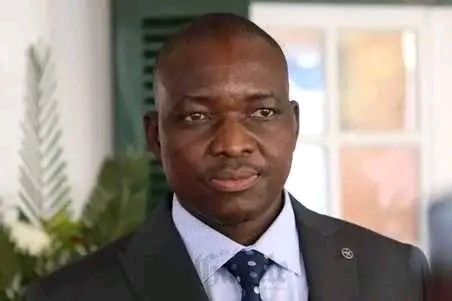
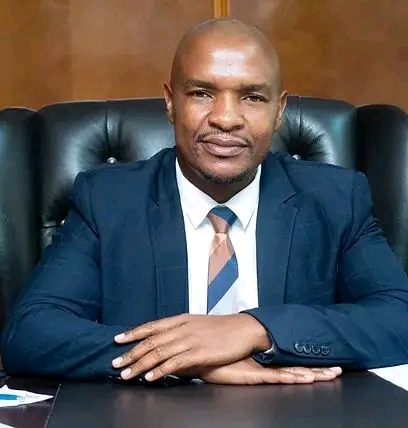
Derreck Mpofu, the dismissed ZIMURA Board Member
By Bradley Mhungu
The involvement of musicians in the Zimbabwe Music Rights Association (ZIMURA) dispute last Monday marked a decisive turning point, transforming what had largely been viewed as a leadership wrangle into an industry-wide demand for accountability, transparency and structural reform in the management of musicians’ rights and royalties.
Zimbabwean musicians gathered at the Zimbabwe College of Music in Harare to formally register their dissatisfaction with ZIMURA’s governance and the handling of royalty collections and distributions.
The day’s programme began with a musicians’ caucus meeting at the Zimbabwe College of Music, followed by a visit to ZIMURA offices in Avondale, before culminating in engagements with the Ministry of Sports, Arts and Recreation.
The coordinated caucus and tour represented a significant escalation in a dispute that has been simmering within the organisation for months.
Previously, the conflict had largely been framed as a boardroom battle between two rival factions — one led by Farai, Alexio Gwenzi and Dingimuzi Phuti, and the other by Derreck Mpofu, Gift Amuli and Joseph Garakara. However, the direct participation of musicians underscored that the crisis extends well beyond internal board politics.
The ZIMURA board, installed in October 2025, has since been rocked by internal divisions which have played out publicly through a series of press statements and media outbursts, exposing deep fractures within the organisation’s leadership.
For much of this period, ZIMURA maintained that the disgruntlement was being driven by a small group of individuals, often characterising the dispute as a politically motivated attack on the current leadership.
Monday’s gathering, however, challenged that narrative, as a broad spectrum of musicians openly voiced their concerns and demanded sweeping reforms aimed at ensuring that artists meaningfully benefit from royalties generated by their work.
The faction led by Mpofu, Amuli and Garakara argues that ZIMURA has long failed in its core mandate to represent and protect the interests of musicians, a failure they say has contributed to persistent financial hardship among artists who depend on royalties for their livelihood.
After a series of press conferences in which the trio articulated their grievances in their capacities as elected board members, they were this time joined by musicians themselves — the primary beneficiaries of music rights administration.
The presence of senior and established artists, including Chief Hwenje, Trymore Bande, Seh Calaz, Guspy Warrior, Baba Shupi, Ricky Fire, Knowledge Kunenyati, Trevor Dongo, Simon Mutambi, Celcious, Solo Makore and Bernard Betera, among others, highlighted that dissatisfaction now lies primarily with musicians rather than board members.
Among their key demands, musicians called for the immediate suspension of royalty collection, arguing that collections should only resume after the implementation of reforms that guarantee transparency and accountability.
They further demanded the resignation of Chief Executive Officer Polisile Ncube Chimhini, her deputies and the entire secretariat. The musicians also called for the temporary closure of ZIMURA offices and the commissioning of a forensic audit, proposing that staff be barred from accessing the premises until the audit process is concluded.
Following the presentation and discussion of their grievances, the musicians proceeded on a familiarisation tour of ZIMURA offices in Avondale. At the offices, they met Dr Henry Makombe, who advised them that the premises were locked, and they were also met by officers from the Zimbabwe Republic Police (ZRP).
The musicians commended the ZRP for their professionalism and for encouraging peaceful engagement and lawful conduct throughout the process. The day’s activities concluded with the musicians meeting the Deputy Minister of Sports, Arts and Recreation, Hon Emily Jesaya, where they formally presented their concerns and demands.
According to Derreck Mpofu, the engagement marked only the beginning of a broader push for reforms, with more action expected in the coming days as musicians intensify pressure for accountability and transparency at ZIMURA.