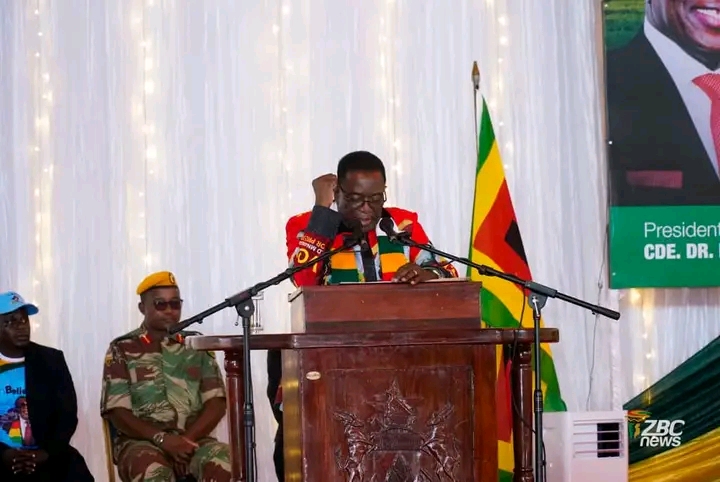
Minister of of Transport and Infrastructure Development Hon Felix Mhona
By Dickson Bandera
A law to compensate victims of road traffic accidents is nearing completion as Government intensifies stakeholder consultations on the Road Accident Fund Bill, a legislative overhaul expected to reshape Zimbabwe’s post-crash compensation framework.
The Bill, being spearheaded by the Ministry of Transport and Infrastructural Development, is at the consultation stage following Cabinet’s approval of its guiding principles. Once enacted, it is expected to provide a structured and reliable mechanism for assisting road accident victims, who have for years borne the brunt of weak and fragmented legal protections.
Zimbabwe continues to record worrying levels of road traffic accidents, with an average of 40 000 crashes annually that result in approximately 13 680 injuries and substantial economic losses equivalent to about 3 percent of GDP each year, according to official statistics. Government figures further show that on average five people die daily on Zimbabwe’s roads, underscoring the urgent need for reform.
Under the current fault-based system, victims must prove another party’s negligence before they can access compensation — a process that is often costly, lengthy and inaccessible for many families. The proposed no-fault Road Accident Fund Bill is designed to remove this barrier, enabling accident survivors to obtain immediate medical care, emergency evacuation and funeral assistance without establishing fault.
Friday’s consultations in Harare brought together transport operators, insurers, civil society organisations, legal practitioners and members of the public to exchange views on the structure of the Fund, its funding mechanisms and benefit limits. Stakeholders generally welcomed the victim-centred approach while urging Government to include strong oversight and transparency safeguards in the final text.
The Bill proposes that the Fund will be established as a statutory body financed through a dedicated portion of compulsory motor vehicle insurance premiums and supplemented by Treasury allocations. Government says the new framework will help reduce costly litigation and ensure faster support for victims and their families.
Officials emphasise that while the Fund will provide humanitarian relief on a no-fault basis, it will not shield reckless drivers from criminal liability; traffic offences and prosecutions will continue under existing laws.
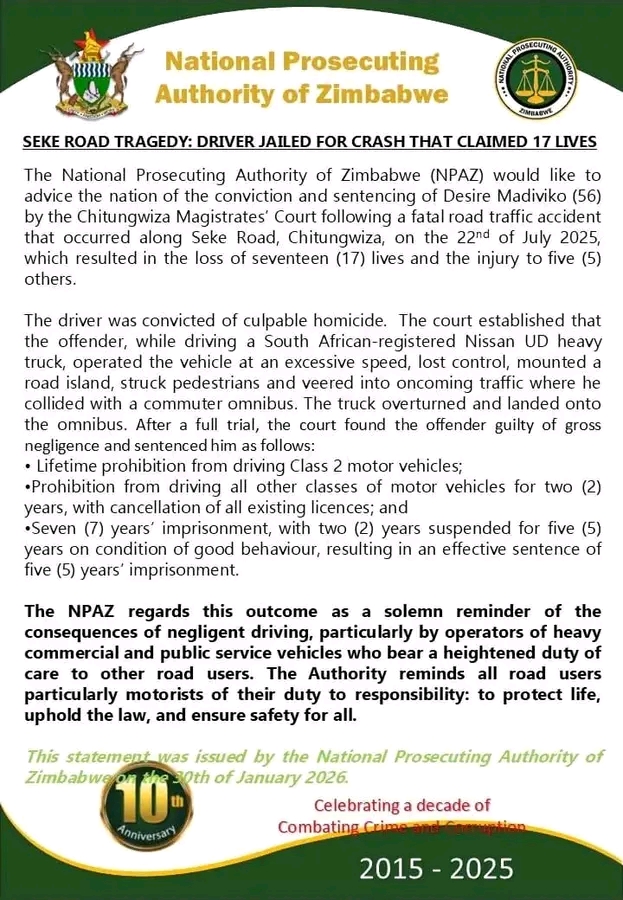
The push for the Bill comes amid a broader road safety crisis. Recent data shows that road traffic accidents increased by nearly 20 percent in the second quarter of 2025, with hundreds of fatalities and thousands of injuries recorded across the country. Pass rates in driver competency tests remain low in many provinces, flagging concerns about driver training and licensing standards.
Broader Ministry Reforms
Transport Minister Felix Mhona — who has been at the centre of the reform drive — has also overseen a series of other measures aimed at improving road safety and transport services in line with the Ministry’s mandate:
Road repair and rehabilitation: Government has rolled out the Emergency Road Rehabilitation Programme (ERRP) and the Road Development Programme (RDP) to improve road surfaces and reduce accident-prone conditions.
Driver training and licensing reforms: Initiatives to modernise driver training, increase competence standards and streamline licensing processes are underway, including digitalisation of vehicle registration and licensing data through the Zimbabwe Integrated Transport Management Information System (ZIMTIS).
Reduced fees and bureaucratic obstacles: The Ministry has introduced measures to simplify licensing procedures and reduce associated fees, helping motorists obtain licences and vehicle documents more efficiently.
Strengthening enforcement: As part of road safety campaigns, the Traffic Safety Council of Zimbabwe and law enforcement are stepping up enforcement against distracted driving and other high-risk behaviours.
Together, these reforms reflect Government’s effort to reduce Zimbabwe’s high road crash toll by tackling both infrastructure deficiencies and systemic weaknesses in driver preparation and traffic management.
Once public consultations on the Road Accident Fund Bill are concluded, Government says it will submit the Bill to Parliament for debate, where legislators will scrutinise its governance, funding model and benefit structures before it can be enacted into law.