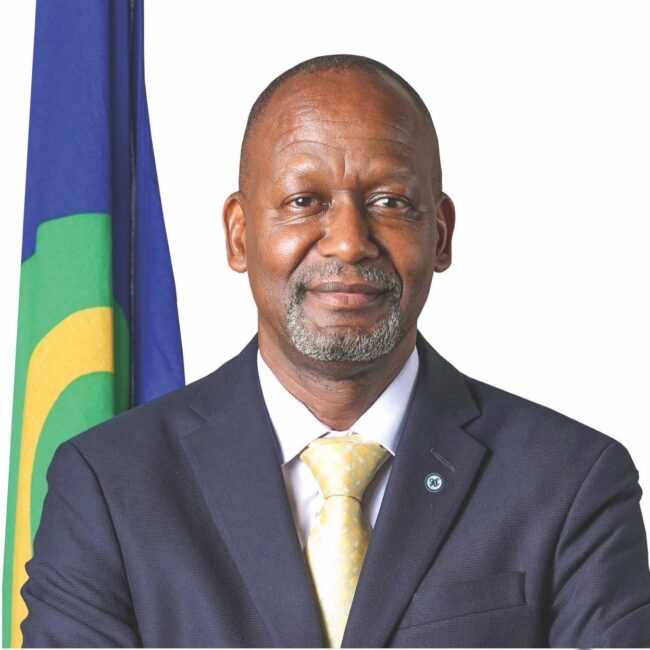
SADC Executive Secretary His Excellency Ellias Magosi
By Dickson Bandera
Victoria Falls– SADC Executive Secretary, His Excellency Ellias Magosi says strong political will across member states has driven notable gains in electricity access, with the regional average now reaching 56 percent, while warning that sustained investment is critical to maintain momentum.
Electricity access in the SADC region has improved significantly over the past year, with Mauritius and Seychelles achieving universal access. The regional average now surpasses that of the East African Community (39 percent) and ECOWAS (53 percent).
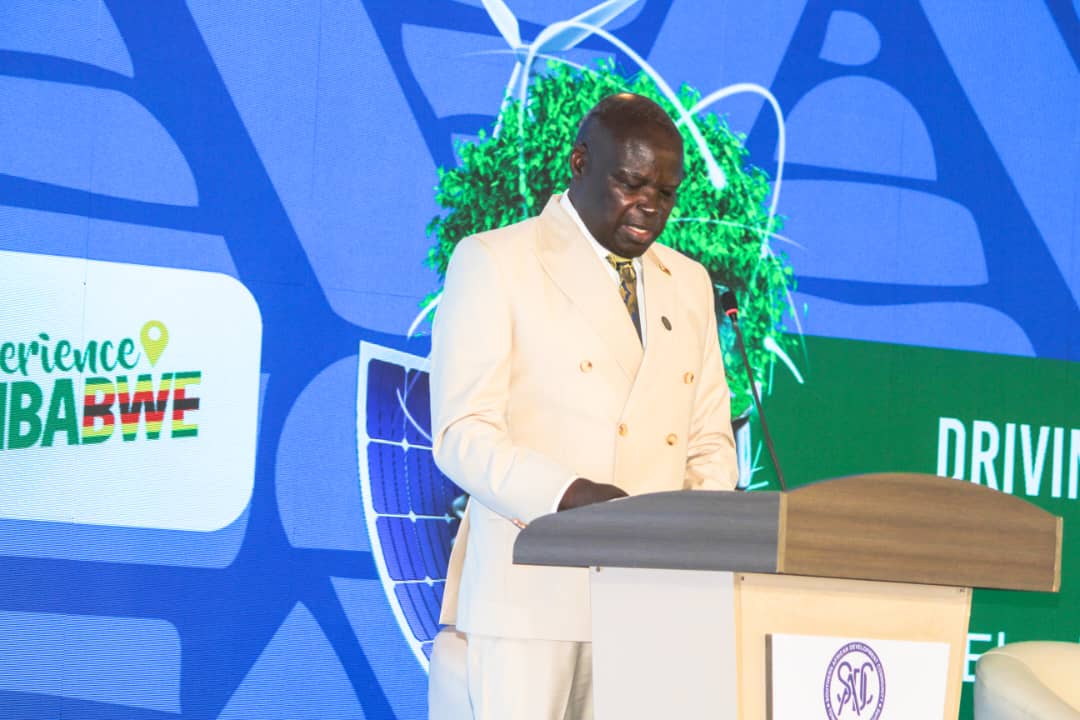
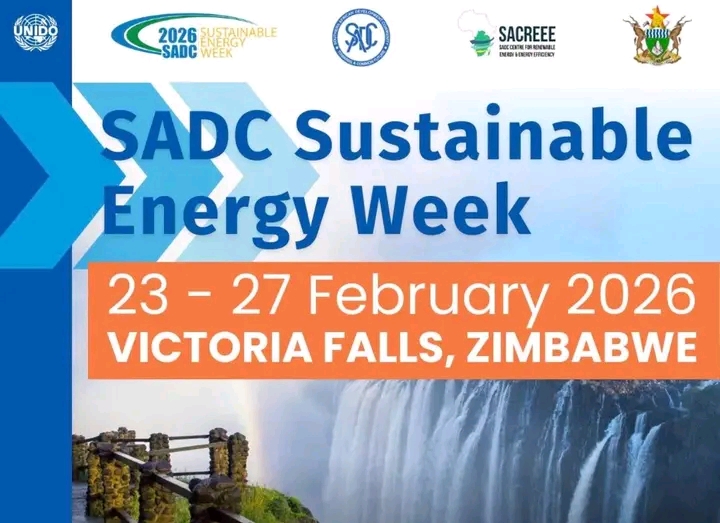
In his address at the official opening of the SADC Sustainable Energy Week on Wednesday, HE Magosi highlighted the strides made in expanding regional power access, attributing the progress to a series of ongoing reforms being implemented across the region and throughout Africa.
“This milestone, achieved within one year of the inaugural SADC Sustainable Energy Week, demonstrates strong political commitment to advancing energy access, security, and sustainability across the region,” said Magosi.
Magosi also highlighted progress in strengthening regulatory frameworks, noting that all SADC member states have now established national energy regulators.
“I am pleased to report that all SADC Member States have now established national energy regulators, with the Democratic Republic of Congo and Comoros the most recent. This marks a major step in strengthening regulatory governance and investor confidence,” he said.
He urged newer regulators to integrate into regional systems to enhance efficiency and cooperation.
“I encourage the regulators of Comoros, the Democratic Republic of Congo, Madagascar, and Seychelles to join RERA to promote regulatory harmonization, capacity development, and transparent, efficient energy markets in SADC,” Magosi said.
On infrastructure, Magosi pointed to steady progress in regional power interconnection projects aimed at boosting electricity trade and system reliability.
“I am pleased to report strong progress on regional interconnector projects. The Malawi-Mozambique interconnector is nearing completion and is tentatively scheduled for commissioning by June 2026,” he said.
He added that the Tanzania-Zambia interconnector, which has secured World Bank financing on the Zambian side, is expected to be completed by 2028, and will help integrate remaining mainland member states into the grid.
Efforts to connect Angola to the regional grid are also advancing.
“Efforts to link Angola to the SAPP network through Namibia have reached the financial structuring stage. Once completed, these priority interconnectors will enable Angola to trade surplus power and support evacuation from major regional projects, including Grand Inga in the DRC, Mpanda Nkuwa in Mozambique, and the Baynes Hydropower Project between Namibia and Angola,” he said.
Magosi further revealed that the SADC Secretariat is engaging island member states to consider joining the regional power pool to enhance technical cooperation and market development.
Despite the progress, he cautioned that political commitment must now be matched with concrete investment.
“While these steps demonstrate strong political will, they must be complemented by investments in power generation, transmission, distribution, mini-grids, and cross-border electrification initiatives,” he said.
“We must continue intensifying efforts to expand electricity access through innovative financing mechanisms, rural electrification agencies, and diversified technological approaches, including grid extension, smart grids, and off-grid solutions tailored to rural and disadvantaged communities.”