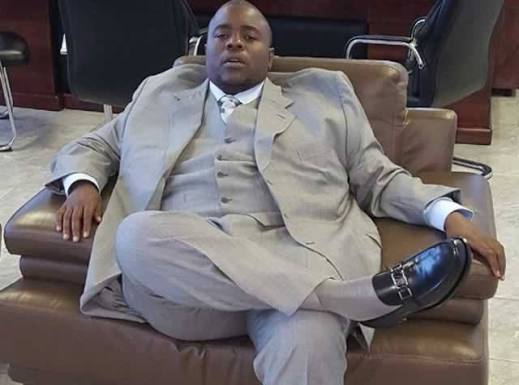
Traditional leader Timothy Chiminya (right) with His lawyer Adv Mtisi.
By Staff Reporter
The High Court has granted bail to traditional leader Timothy Chiminya, who styles himself as King Munhumutapa, after he spent more than two months in prison serving a sentence for undermining the authority of President Emmerson Mnangagwa.
Justice Davison Foroma on Wednesday ordered Chiminya’s release on bail pending the determination of his appeal against both conviction and sentence, ruling that the interests of justice would be served by granting him temporary freedom under strict conditions.
Chiminya was convicted on 10 November 2025 by Harare Magistrate Tapiwa Kuhudzai and subsequently sentenced on 13 November to 10 months’ imprisonment, with two months suspended on condition of good behaviour. The sentence translated to an effective eight months behind bars.
He was charged under Section 33 of the Criminal Law (Codification and Reform) Act (Chapter 9:23) following his arrest in Harare on 16 December 2024. Prosecutors alleged that Chiminya undermined the authority of the President by purporting to appoint and dethrone traditional chiefs — powers constitutionally reserved for the Head of State.
After his conviction, Chiminya, through his lawyer Gift Mtisi of Zimbabwe Lawyers for Human Rights (ZLHR), applied for bail pending appeal. The application was opposed by prosecutors from the National Prosecuting Authority.
In granting bail on 4 February 2026, Justice Foroma ordered Chiminya to deposit US$200 with the Clerk of Court at Harare Magistrates’ Court, reside at his provided residential address, and report once a month to a local police station.
The judge further directed that Chiminya must attend court in person whenever his appeal is heard and comply with all conditions until the matter is finalised.
Zimbabwe Lawyers for Human Rights welcomed the ruling, noting that the court had exercised its discretion to balance the administration of justice with the applicant’s constitutional rights as his appeal proceeds.
Chiminya’s appeal against both conviction and sentence is yet to be heard.