By Dickson Bandera
The Boterekwa Valley, once heavily scarred by decades of mining, is now steadily regenerating—and Chenxi’s interventions are at the centre of the transformation.
Chenxi Investments, the operator of the Boterekwa Consolidated Gold Mining Project, has emerged as one of Zimbabwe’s strongest corporate champions of environmental restoration, spearheading large-scale rehabilitation, reforestation and scientific land recovery initiatives in the scenic Boterekwa landscape.
During the 2025 reporting cycle, Chenxi planted 11,200 indigenous trees across rehabilitated waste dumps and mined-out areas, making it one of the largest private-sector reforestation efforts in the Midlands Province this year. Newly restored areas were planted with species such as Kenyan croton, beefwood, waterberries, and mahogany, supported by a comprehensive drip irrigation system installed on dump sites.
The mine’s nurseries—run jointly with local schools—now hold over 50,000 seedlings, including 27,000 acacia trees being prepared for the 2026/27 rainy season, positioning the area as a long-term indigenous seedling hub for the province.
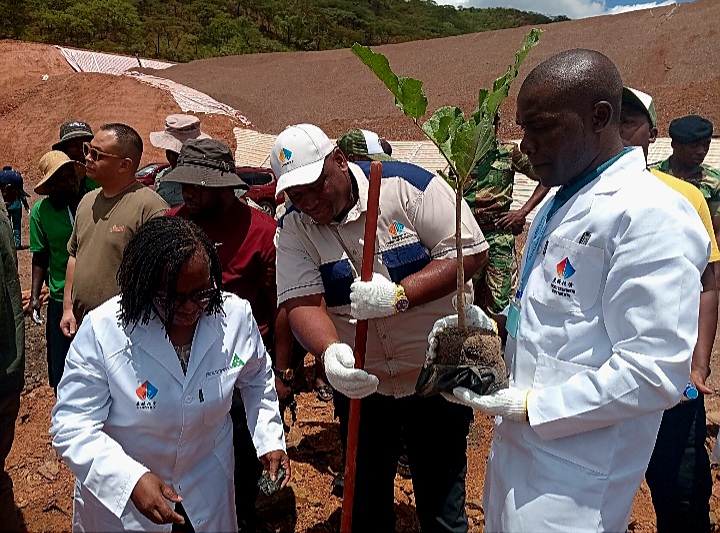
This year, the Midlands Province selected Chenxi Mine as the official venue for the National Tree Planting Day, a recognition of the company’s expanding environmental leadership.
The Forestry Commission delivered 2,000 indigenous tree seedlings, including the Mumvee (Kigelia Africana/Sausage Tree)—the official Tree of the Year. A total of 1,000 Mumvee trees were prepared specifically for the event, symbolizing the province’s commitment to restoring the iconic Boterekwa corridor.
Communities, schools, EMA officials, and provincial leaders participated in the planting ceremony, marking one of the largest coordinated tree-planting events in the province.
According to the company’s 2025 Environmental Rehabilitation and Compliance Progress Report, Chenxi has significantly expanded its ecological restoration footprint, implementing evidence-based environmental measures aligned with national regulations and international best practice.
The project, which operates under a valid EIA certificate issued by the Environmental Management Agency (EMA), has invested in soil rehabilitation, erosion control, indigenous reforestation, scientific trials, and community-driven greening programmes.
Scientific Rehabilitation: Grass Trials, Soil Studies and International Collaboration
Chenxi’s environmental stewardship is being strengthened through collaboration with specialists from Hunan City University (China) and the Forestry Commission. Joint scientific interventions include:
Juncao (Chinese Giant Grass) trials for soil stabilization and improving organic matter.
Katambora Rhodes grass trials, which recorded excellent germination, drought tolerance and rapid soil cover—now adopted across all mine sites.
Planned introduction of Cynodon (Bermuda grass) for heavy metal tolerance and phytoremediation.
Soil fertility analysis and ecosystem restoration trials integrating trees, shrubs and grasses.
These scientific projects have positioned Boterekwa as a model site for modern mine-land rehabilitation.
Stabilisation of Dumps and Pits Reduces Erosion Risks
The rehabilitation report shows significant engineering and environmental interventions across the mining landscape, including:
Terracing of waste dumps
Extensive vetiver grass planting for erosion control
Construction of stormwater drains, cut-off trenches and reinforced berms
Geotechnical stabilisation of mined-out pits through controlled benching and slope re-shaping
GNSS subsidence surveys conducted over eight months confirmed that almost all pads and dumps were within acceptable engineering tolerances, with corrective actions implemented where anomalies occurred.
“Planting One Million Trees” — Chenxi’s Long-Term Vision
Under the banner “Planting One Million Trees,” Chenxi has set a long-term reforestation target aimed at reversing decades of environmental degradation in Boterekwa. The programme includes:
Progressive tree planting as mining operations advance
Community-based nurseries run by local schools
Future integration of truncheon propagation and mixture of pioneer and long-term indigenous species
Ongoing monitoring of tree survival rates
Water Quality Tests Show Full Compliance
Groundwater monitoring boreholes sampled in August and October 2025 showed that water quality around the mine remains within national standards. All parameters—including pH, conductivity, cyanide, and heavy metals—were within safe limits, demonstrating effective environmental control systems. Only one borehole recorded elevated nitrate levels, attributed to possible external surface contamination.
EMA Commends Progressive Rehabilitation
Environmental regulators say the Boterekwa project now stands as one of the most compliant and environmentally proactive mining operations in the province.
Through science-driven rehabilitation, major reforestation initiatives, community partnerships, and improved engineering controls, Chenxi Investments has positioned itself as a leading champion of environmental restoration in the Midlands Province.
Hosting the 2025 National Tree Planting Day at its mine—with the planting of the culturally significant Mumvee (sausage tree)—further underlined Chenxi’s growing role in national environmental stewardship.
This is a responsibility that safeguards and preserves resources for the benefit of future generations.