Political Education and the Continuity of Revolutionary Consciousness
By Dickson Bandera and Bradley Mhungu
Political education remains one of the most critical processes in the grooming of citizens with desirable ideological, civic and national values. It is through sustained political education that societies cultivate informed participation, ideological clarity and national consciousness necessary for stability and development.
From the formative years of African nationalism, political leadership consistently relied on structured political education to explain the objectives of the liberation struggle, clarify ideological positions and cultivate disciplined, politically conscious cadres.
Revolutionary thinkers such as Chairman Mao Zedong emphasised continuous political education as a cornerstone for sustaining strong and resilient political institutions in many of his lessons.
“Not to have a correct political orientation is like not having a soul.”
The training and conscientisation of the masses has therefore always stood as a pillar of an enlightened, organised and progressive society.
ZANU PF, founded in 1963, is a revolutionary political party that spearheaded Zimbabwe’s armed liberation struggle, culminating in independence in 1980, with the support of other progressive movements and friendly nations.
Since attaining Independence in 1980, ZANU PF has remained firmly committed to the task of nation-building through a wide range of political, economic, and social programmes implemented through its structures across the country.
Central to this mission has been the correction of racial and structural imbalances created during the colonial era, which were systematically dismantled and replaced with people-centred and inclusive policies aimed at empowering the majority.
From the inaugural post-independence elections of 1980 through successive electoral cycles, ZANU PF has consistently emerged victorious, securing its mandate through sustained popular support.
This continuity of leadership reflects not only the party’s organisational strength, but also its deep-rooted connection with the masses and its ability to respond to evolving national and global dynamics while maintaining ideological coherence and strategic direction.
In 2017, through Operation Restore Legacy, the party undertook a process of renewal and repositioning that culminated in the elevation of President Emmerson Dambudzo Mnangagwa as First Secretary following the resignation of former President Robert Gabriel Mugabe.
This marked a defining moment in the party’s history, characterised by institutional renewal and policy reinvigoration.
The transition ushered in the New Dispensation, also known as the Second Republic, whose ideological orientation is anchored on the principle that Zimbabwe is a friend to all and an enemy to none.
This is operationalised through the Engagement and Re-engagement Policy, as well as the “Zimbabwe Is Open for Business” mantra, aimed at restoring confidence, attracting investment, and accelerating national development.
In this context, President Mnangagwa has articulated Vision 2030, which seeks to transform Zimbabwe into an upper-middle-income economy, with all arms of government aligned towards the realisation of this national aspiration.
As the nation continues to advance, a new generation of Zimbabweans—many born long after Independence—has come of age. These young citizens are now active participants in electoral processes and contributors to the economy across diverse sectors, underscoring the importance of political education, ideological continuity, and inclusive participation in shaping the country’s future.
This generation has grown up in the era of the Fourth Industrial Revolution, while still experiencing the residual impacts of the Third Industrial Revolution. Their worldview, communication habits and political engagement differ significantly from those of previous generations.
This demographic reality demands a deliberate and innovative approach to political education—one that speaks directly to lived realities while grounding citizens firmly in the historical, ideological and developmental philosophy of the nation.
Predominantly active on digital platforms such as TikTok and Instagram, younger citizens are less likely to be effectively reached through traditional media alone. Yet history consistently demonstrates that it is the youth who drive transformative change, guided by the wisdom and experience of elders.
It is against this backdrop that ZANU PF has intensified efforts to modernise political education without diluting its revolutionary essence.
On Friday, 9 January 2026, the party through its Commissariat launched the Politics Mubhazi – In-Bus Political Interaction Tour, an innovative national engagement programme that takes political education directly into everyday community spaces.
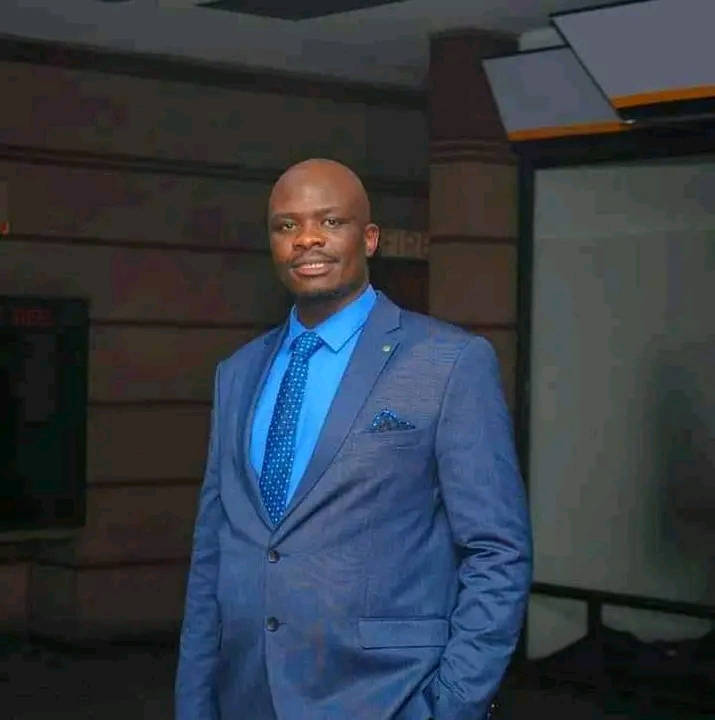
The programme, hosted by Cde Taurai Kandishaya—ZANU PF Deputy National Political Commissar, Politburo member and President of the Africa Youth Council—alongside Cde Munashe Mtutsa, commenced along the Harare–Murewa route.
Symbolically and practically, the initiative breaks away from conventional political rallies by hosting live political discussions inside a moving bus, bringing leadership and citizens into direct, uninterrupted dialogue.
At its core, Politics Mubhazi is designed to deepen political consciousness, particularly among young people and first-time voters. It provides participants with a clearer understanding of ZANU PF’s structures, ideology, policies and national vision, while also creating a safe platform for citizens to raise questions on governance, development and community concerns.
Cde Kandishaya has emphasised that the programme draws inspiration from President Emmerson Mnangagwa’s development philosophy of “leaving no one and no place behind.”
In this regard, Politics Mubhazi embodies the Second Republic’s commitment to inclusive, people-centred governance by prioritising listening, dialogue and direct engagement over political distance.
The initiative is deliberately inclusive, offering free registration, transport and refreshments to participants. Openness, unity and patriotism form its guiding values, reinforcing the importance of constructive national discourse anchored in love for country rather than division.
Importantly, the programme also serves as a corrective platform against misinformation by enabling direct interaction between citizens and party leadership.
Through tolerance and constructive debate, participants are exposed to factual explanations of policy positions and development priorities, strengthening informed political participation.
Beyond mobilisation, the initiative is expected to generate authentic grassroots feedback, ensuring that future policies and interventions are informed by the lived experiences of ordinary citizens. In this sense, political education becomes a two-way process—educating the masses while simultaneously refining leadership responsiveness.
An informed and politically conscious society remains essential for effective policy implementation, the consolidation of sovereignty and the safeguarding of the gains of the liberation struggle.
Political education is a strategic necessity for sustainable national development and the continuity of revolutionary consciousness within the framework of the Second Republic.