By Dickson Bandera
The People’s Own Savings Bank (POSB) has secured international sustainability certification from the European Organisation for Sustainable Development (EOSD), marking a significant step in the bank’s efforts to embed sustainability across its business and operations.
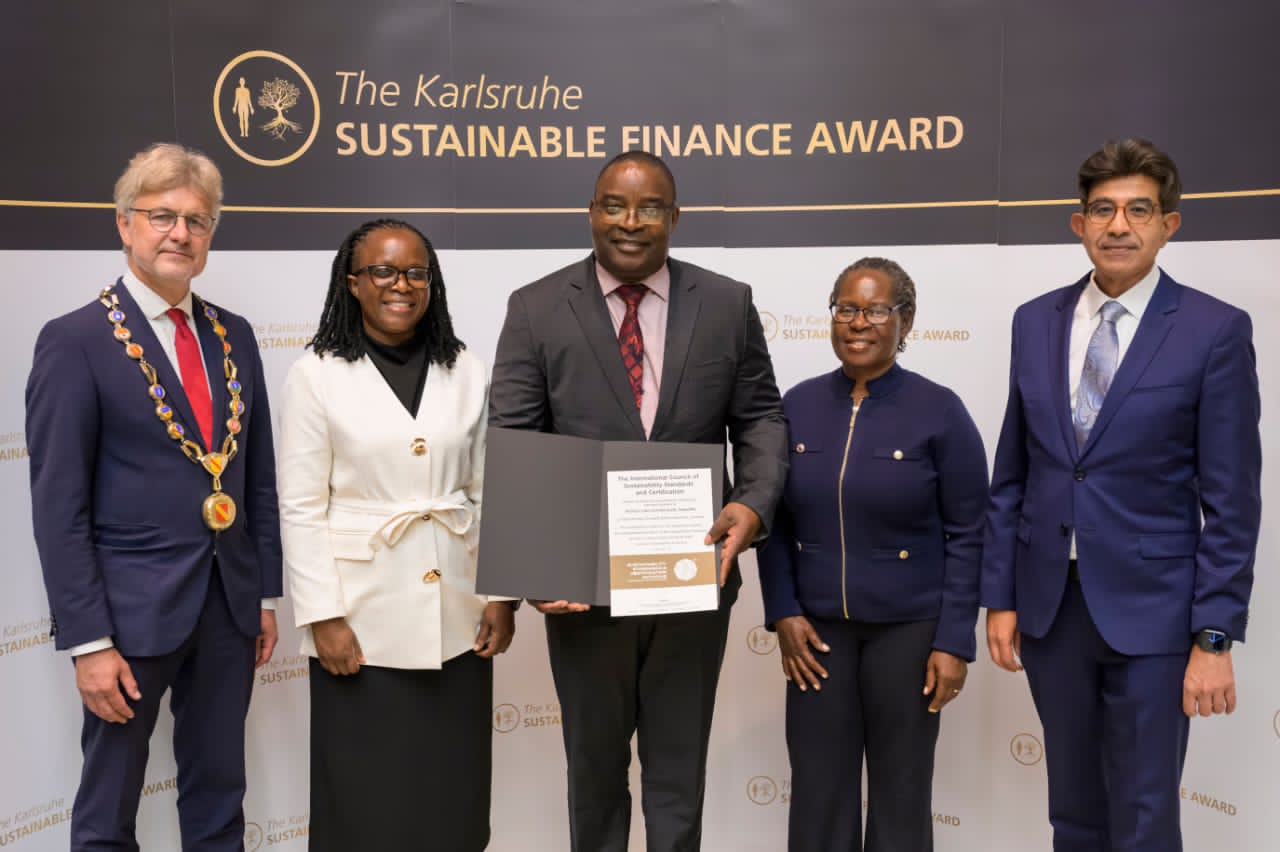
The certification, awarded under the Sustainability Standards and Certification Initiative (SSCI), was formally presented at a ceremony in Germany on August 27, 2026.
The certification goes beyond conventional environmental initiatives, assessing how sustainability is incorporated into a financial institution’s governance, strategy, operations, technology, financial products, human capital and stakeholder engagement.
For POSB, the certification recognises progress in moving sustainability from isolated initiatives and compliance requirements into a broader management framework influencing institutional governance, resilience, digital capability, financial products and long-term value creation.
POSB Chief Executive Officer Garainashe Changunda said the achievement demonstrated the commitment of the bank’s board, management and staff to building a sustainable and resilient institution.
“Attaining the EOSD Sustainability Certification is a significant achievement for POSB and demonstrates the commitment of the Board, management and staff to building a sustainable and resilient institution,” Changunda said.
He said sustainability was increasingly influencing how the bank was governed, how financial solutions were developed and delivered, and how the institution created lasting value for customers, stakeholders and the wider economy.
POSB’s sustainability strategy is anchored on three High-Impact Goals — boosting savings mobilisation, enhancing financial inclusion and promoting small and medium enterprises (SMEs).
The priorities are closely linked to the bank’s traditional role as a savings institution, with POSB seeking to mobilise savings and channel financial resources towards activities that support livelihoods, businesses and inclusive economic growth.
“As a savings bank, POSB has an important responsibility to mobilise savings and channel financial resources towards activities that improve livelihoods, support businesses and promote inclusive economic growth,” Changunda said.
He said the bank would continue developing sustainable financial solutions, strengthening impact measurement and disclosures, and exploring opportunities to mobilise development and climate finance.
The certification comes as sustainability assumes a growing role in Zimbabwe’s financial sector, with institutions increasingly being encouraged to integrate environmental, social, governance and economic considerations into their business models and decision-making.
The SSCI framework is designed to assess sustainability at an institutional level rather than focusing solely on individual corporate social responsibility projects.
EOSD Chief Executive Officer and Chairman of the International Council of Sustainability Standards for Value-Driven Financial Institutions, Arshad Rab, said POSB’s more than 120-year history made the certification particularly significant.
“For a savings bank, savings are not simply deposits held by a financial institution. When effectively mobilised and deployed, they become capital that can enable individuals to invest, businesses to grow and economies to build greater financial strength from within,” Rab said.
He said POSB’s nationwide reach gave its sustainability transformation wider significance because it could extend sustainable financial services to individuals, families, entrepreneurs and smaller businesses.
Rab said the certification should be viewed as a platform for continued transformation rather than an end in itself.
“Certification recognises the institutional progress POSB has made, but its real value will be demonstrated through the Bank that POSB continues to become: more innovative, more responsive to a changing economy and increasingly capable of using its financial resources and institutional reach to enable people and businesses to create greater economic value,” he said.
The certification could strengthen POSB’s efforts to develop sustainable financial products and position the bank to explore development and climate-finance opportunities, although certification itself does not guarantee access to such funding.
Changunda also acknowledged the Reserve Bank of Zimbabwe for its support, guidance and continued engagement throughout the certification process.
Established in December 1904 as the Post Office Savings Bank, POSB was created to mobilise savings for national development. The institution initially operated through the Post Office network before becoming a separate corporate entity under the People’s Own Savings Bank of Zimbabwe Act in 2001.
The sustainability certification adds a new dimension to the institution’s historic savings mandate as POSB seeks to align its operations with changing expectations around responsible finance, financial inclusion and sustainable economic development.
POSB said the certification would provide a platform for the bank to deepen financial inclusion, strengthen institutional resilience and expand its contribution to Zimbabwe’s national development priorities.