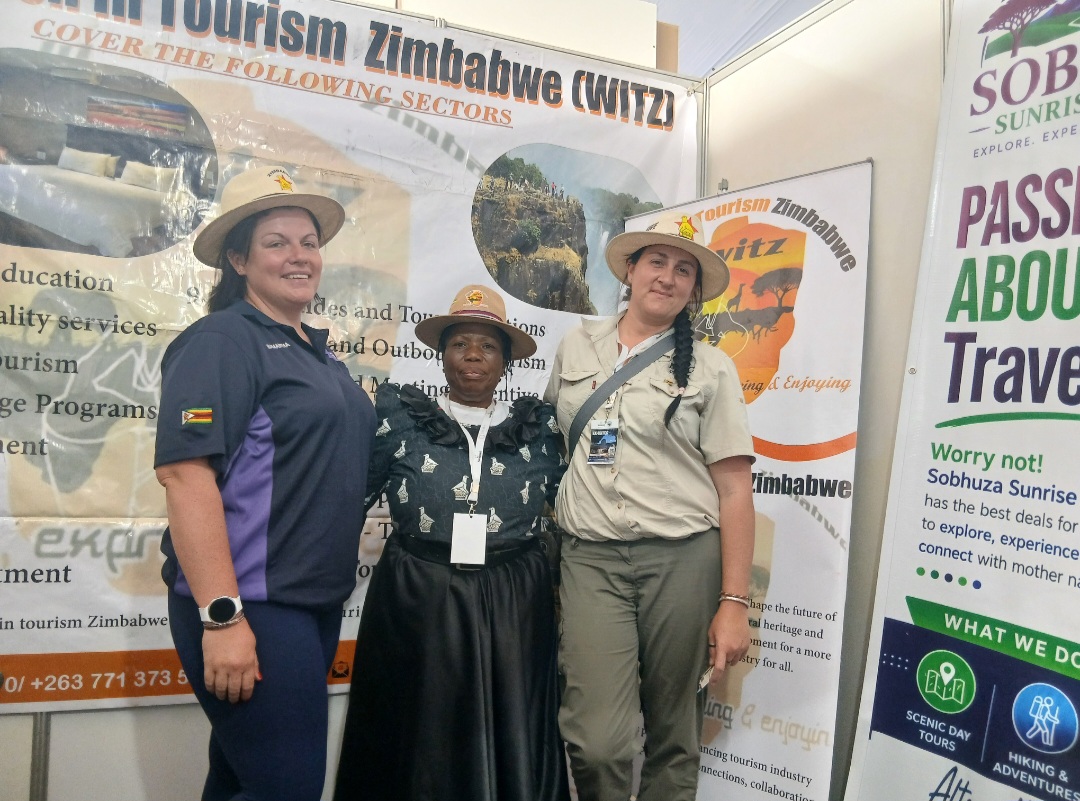
Women in Tourism Zimbabwe president Violet Mhute poses for a photo with International Buyers at the Sanganai/Hlanganani World Tourism Expo 2026 in Masvingo
By Dickson Bandera
MASVINGO — Women in Tourism Zimbabwe is calling for stronger partnerships between government, the private sector and development partners to expand economic opportunities for women in the tourism industry.
Speaking on the sidelines of the Sanganai/Hlanganani World Tourism Expo 2026 in Masvingo, Women in Tourism Zimbabwe president Violet Mhute said the organisation was using the tourism platform to connect women-led businesses to markets, networks and potential partners.
“Our mission is to unlock women’s potential and enhance the tourism industry through women’s economic empowerment, connection, collaboration and networks, and also taking them to markets just like the Sanganai/Hlanganani Tourism Expo,” she said.
The association brings together women operating across a broad spectrum of the tourism value chain, including accommodation and hospitality, culinary and gastronomy tourism, culture and heritage, event management, leisure and entertainment, destination management, travel consultancy, tour operations and guiding.
It also represents women involved in MICE — meetings, incentives, conferences and exhibitions —, adventure tourism, wellness and spa services, eco-tourism and agritourism.
Mhute said women involved in the production of natural oils, lotions, soaps and other wellness products were also part of the growing tourism ecosystem.
The association is further promoting women in crafts and the production of tourism-related products, including jewellery, bags, hats, clothing and other souvenirs.
“When you visit as a tourist, whether you are a local tourist or a foreign tourist, you need to get something that will show that you were in Zimbabwe,” Mhute said.
She said Sanganai/Hlanganani provided an important platform for women entrepreneurs to showcase their products and interact with potential markets.
Women in Tourism Zimbabwe has chapters in all 10 provinces, with provincial committees responsible for mobilising and supporting women in the sector.
However, Mhute said inadequate funding remained one of the organisation’s major challenges.
She said the association largely depended on membership subscriptions, which currently stood at about US$10 for training and US$5 for administration, resources she said were insufficient to sustain its programmes.
“The challenges that we get is funding because we are depending on the money that we contribute as members, the membership fee and also our subscription to run the organisation. But that money is not enough,” she said.
Mhute called for partnerships with government, private companies and other organisations that share the association’s objective of economically empowering women in tourism.
She said increased collaboration could enable women to move beyond small enterprises and participate in larger tourism investments, including lodges, hotels and conference facilities.
The association’s presence at Sanganai/Hlanganani 2026 comes as Zimbabwe seeks to expand tourism participation and increase the economic benefits of the sector across communities.
Mhute said Women in Tourism Zimbabwe would continue working to ensure women were not only participants in tourism but also owners, investors and decision-makers within the industry.
She also highlighted her own business, which manufactures leather products and African attire, including Zimbabwe’s national dress.
Her leather product range includes shoes, safari shoes, sandals, handbags, purses, wallets and belts, which she said offered tourists locally produced souvenirs.
She said the products were designed to combine Zimbabwean identity with quality and durability.
“We want women to be economically empowered and to be able to own big lodges, big hotels and conference facilities as women,” Mhute said.