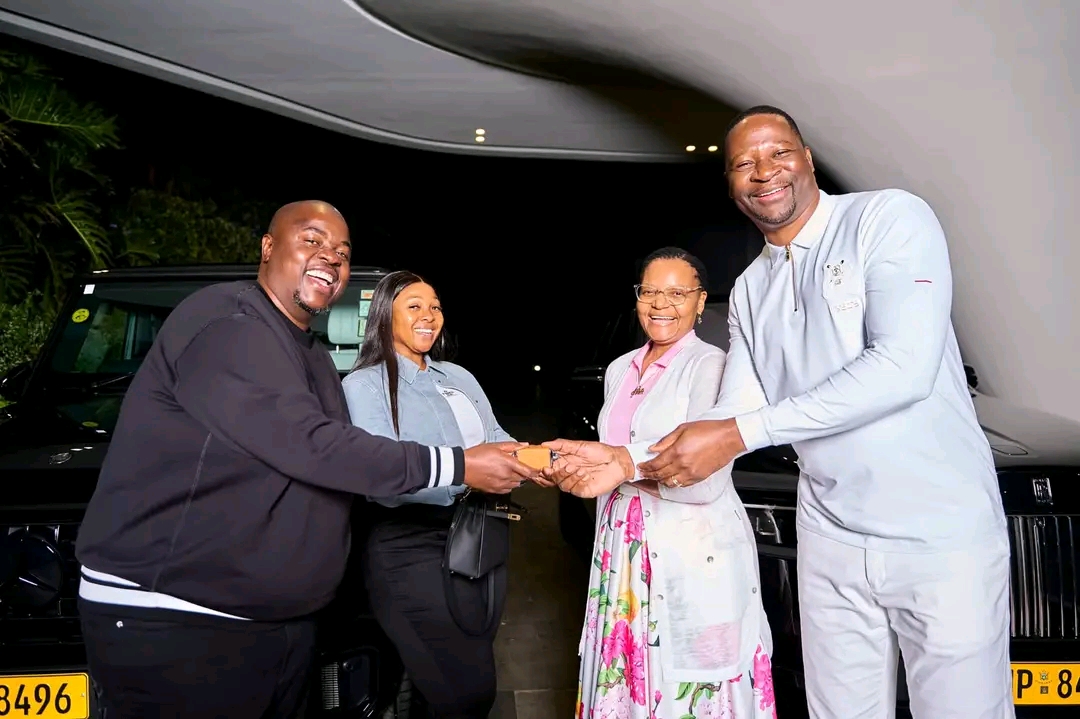
The late businessman Wicknell Chivayo and wife Lucy Muteke Chivayo together with Prophet Emmanuel Makandiwa and wife Ruth Makandiwa
The death of Sir Wicknell Chivhayo, his wife Lucy Muteke, two pilots and a security aid attracted national and international attention, but allegations that journalists were denied access, assaulted and ordered to delete footage have ignited a debate about media freedom, private property and the public’s right to know.
By Dickson Bandera
The death of businessman Sir Wicknell Chivhayo, his wife and three other occupants of a helicopter shocked Zimbabwe on Wednesday, September 30, 2026. As news of the tragedy began circulating, reactions were mixed, with some people dismissing the reports as a hoax while others feared the worst. Confirmation that all five occupants had perished in the accident brought an outpouring of grief, disbelief and public interest.
But as the nation came to terms with the loss, attention quickly shifted to the funeral arrangements of the businessman whose public profile had grown considerably in recent years.
Chivhayo had become a household name through his high-profile philanthropy, regularly announcing gifts of vehicles, cash and other assistance to musicians, athletes, politicians, comedians, struggling former public figures and ordinary citizens seeking assistance. His donations extended to schools, hospitals, the police, and religious organisations, including the Johanne Masowe Echishanu sect, where he was a member.
While he did not divulge his business enterprises in the same manner he flaunted his riches, Chivhayo was associated with businesses Intratrek and IMC Communications, but there are repoets that he had more businesses. His engagements with political and business leaders in Zimbabwe and the region, including efforts to expand his commercial interests into other African markets, further strengthened his public profile.
His frequent appearances alongside President Emmerson Mnangagwa and other prominent business figures placed him firmly within the national conversation about business, politics, philanthropy and the relationship between wealth and public influence.
For many beneficiaries, Fridays had become synonymous with his announcements of gifts. Selected individuals would be directed to collect fully paid luxury vehicles or cash, while others received houses and other forms of assistance.
Whether celebrated for his generosity or scrutinised over his business dealings and public associations, Chivhayo had become a figure of considerable public interest.
His death was therefore more than a private tragedy. It was a major national news event.
From a private residence to a national story
As news of the accident spread, the funeral became a focal point of public attention. People wanted to understand what had happened, pay their respects and witness the final proceedings surrounding a man whose life had touched different sections of society.
On October 1, reports emerged that people arriving at the family residence in Glen Lorne were being turned away while the family prepared the premises to receive mourners.
Herbert Chivhayo emerged as the family spokesperson, providing updates to the media from the accident scene at Kudenga Farm in Marondera and throughout the funeral arrangements. He announced that the burial would take place on Thursday, October 8, allowing the deceased’s sisters to travel from the diaspora.
The funeral subsequently attracted prominent political, business, religious and entertainment figures. President Mnangagwa and Tanzanian President Samia Suluhu Hassan were among those who attended the proceedings at the residence. Musicians Thomas Mapfumo, Alick Macheso, Freeman and Fungisai were also among the personalities associated with the gathering.
The convergence of political leaders, international dignitaries, business figures, musicians and beneficiaries made the funeral a major media event.
For Zimbabwean newsrooms, the story was difficult to ignore.
It combined tragedy, business, philanthropy, politics, celebrity, public reaction and regional connections. It was precisely the kind of developing story that demanded sustained coverage across television, radio, newspapers, digital publications and social media.
In an increasingly competitive media environment, where audiences follow different outlets and digital analytics measure reach and engagement, every newsroom had a professional responsibility to consider the story’s newsworthiness.
Audiences who follow one particular media organisation are entitled to expect that organisation to report significant developments, rather than simply directing them to another outlet.
The fact that another broadcaster is covering an event does not eliminate the responsibility of other media houses to pursue their own reporting.
The controversy over media access
The funeral’s significance, however, was accompanied by allegations of hostility towards some journalists seeking to cover the proceedings.
Several media practitioners and content creators reportedly complained that they were denied access, harassed or assaulted by security personnel. Some alleged that they were instructed to delete footage they had recorded.
Among those who publicly raised concerns were Rory Studios, Pahasha TV, Oscar Pambuka, Panashe Makufa and Toneo Toneo of TechMag.
The Zimbabwe Content Creators Association and the Zimbabwe Media Commission were reportedly approached over the complaints, while some individuals said they had also filed police reports concerning alleged assaults.
These allegations require independent investigation. The fact that a complaint has been made does not, by itself, establish that an assault occurred or identify the person legally responsible for it.
The complainants have reportedly alleged that security personnel acted on instructions associated with Joachim Chivhayo through DJ Ollah 7. Those allegations must likewise be investigated and tested against evidence before responsibility is attributed to any individual.
Nevertheless, the complaints raise a serious question: how should journalists and content creators be treated when seeking to cover an event of major public interest?
DJ Ollah 7 had been engaged as the event’s official media partner and reportedly received payment for that assignment. He remained at the venue, broadcasting proceedings and capturing the arrival of guests and other major moments through his social media platforms.
His coverage attracted substantial attention. Figures he shared reportedly indicated that his platforms had accumulated approximately 300 million views in connection with the coverage.
Those figures, which would require independent verification and clarification of the measurement period and methodology, illustrate the claimed scale of audience interest.
Ollah 7 also published a comparison of audience figures for his coverage and that of ZTN Prime and ZBC. The figures he displayed reportedly showed approximately 33,000 viewers for his platform, compared with about 7,000 for ZTN Prime and 8,000 for ZBC.
The comparison generated ridicule directed at the state broadcasters and fuelled debate about the changing relationship between traditional media and digital content creators.
But the audience figures should not obscure the central issue.
An official media partnership can provide a designated broadcaster with particular responsibilities and agreed access arrangements. It does not automatically establish that other journalists have no legitimate interest in covering the event.
Nor does the success of one media partner establish that other media organisations should be prevented from pursuing their own coverage.
The question is whether the arrangements were reasonable and whether any restrictions on other journalists were lawful and fairly applied.
The constitutional question: privacy versus media freedom
The argument that journalists should simply have walked away because the funeral was taking place on private property appears straightforward. Legally, however, the issue requires a more careful examination.
Zimbabwe’s Constitution protects both privacy and freedom of the media.
Section 57 protects the right to privacy, while Section 61 guarantees freedom of expression and freedom of the media.
These rights must be considered together rather than treating either as an automatic trump card.
Private property owners have legitimate interests in controlling access to their premises. Families are also entitled to protect their privacy, particularly during moments of grief. A funeral can involve deeply personal experiences that deserve sensitivity and respect.
Media freedom does not automatically grant journalists an unrestricted right to enter private property.
However, the existence of private property rights does not make an event immune from public scrutiny or automatically justify every restriction imposed on journalists.
The crucial consideration is the nature of the event, the purpose of the restriction and whether the restriction is legally justified in the circumstances.
Chivhayo’s funeral had acquired national significance. His philanthropic activities, business interests, public associations and reported declaration as a national hero placed the event firmly within the country’s public conversation.
The attendance of senior political figures, a foreign head of state, prominent musicians and other public personalities reinforced its newsworthiness.
The public interest was not confined to the identity of the deceased. It also concerned the people attending, the public statements being made, the significance of the occasion and the broader reaction to his death.
That level of public interest strengthened the case for comprehensive journalistic coverage, even though it did not automatically entitle every journalist to enter the residence.
There is an important distinction between a family establishing reasonable security and privacy arrangements and a situation in which journalists are allegedly threatened, assaulted or compelled to delete material they have lawfully recorded.
The former may be legitimate. The latter raises additional legal questions that cannot be resolved merely by invoking private property rights.
Section 86 of the Constitution also provides a framework for determining when limitations on fundamental rights may be justified. Whether a particular restriction satisfies the applicable constitutional requirements depends on the right involved, the circumstances and the evidence.
The correct approach is therefore not to dismiss media freedom because the event occurred on private property, but to examine whether the restrictions were lawful, necessary and justified.
Why should journalists have ignored the story?
Some commentators have argued that journalists who were denied access should simply have abandoned the assignment.
That position overlooks the professional responsibilities of journalism.
A journalist’s task is to identify, investigate, verify and communicate information of public interest. When a major national event occurs, newsrooms are expected to make reasonable efforts to cover it accurately and independently.
Walking away may be appropriate where access is lawfully denied and no alternative reporting opportunity exists. Journalists must not trespass or disregard legitimate restrictions merely because they are pursuing a news story.
But there is a difference between respecting a lawful restriction and accepting intimidation as an ordinary condition of professional work.
If a journalist is denied entry, the newsroom can seek clarification, request accreditation, negotiate access, interview people who are willing to speak and report from other lawful locations.
If journalists are allegedly assaulted or ordered to delete footage, those complaints should be documented and investigated rather than dismissed on the grounds that the event was private.
The argument that journalists should have ignored the funeral also fails to recognise the relationship between media organisations and their audiences.
Zimbabweans who follow a particular newspaper, television station, radio broadcaster or digital publication have their own expectations. They may want that outlet to provide its own account, verify information independently and offer a distinct editorial perspective.
The availability of coverage from another platform does not extinguish that responsibility.
A big story does not become the exclusive journalistic property of the person who secures an official media contract.
The limits of an official media partnership
The controversy also raises questions about the role of official media partners at major events.
Organisers may reasonably appoint a media partner to coordinate broadcasts, produce official recordings, manage interviews or document proceedings on their behalf.
Such arrangements can be useful, particularly where security, crowd management and the sensitivities of a funeral require careful planning.
However, an official media partner’s contractual privileges should not be confused with ownership of the entire news event.
An agreement to produce official coverage does not, by itself, establish a general right to prevent independent journalists from reporting on the event through lawful means.
The terms of the agreement, the organiser’s authority over the venue and any applicable legal obligations would need to be examined before reaching a definitive conclusion about the scope of the media partner’s rights.
The distinction is especially important when the event attracts national attention.
A private arrangement between an organiser and a broadcaster should not automatically be treated as the final word on whether other media organisations may lawfully report on matters of public interest.
Nor should audience competition become a reason for hostility among journalists.
Ollah 7’s reported reach may demonstrate the potential of social media broadcasting. It does not establish that traditional broadcasters are irrelevant or that their journalists have no legitimate professional role.
Equally, criticism of an official media partner should be based on verifiable conduct rather than assumptions about motives.
The central question remains whether the arrangements respected legitimate access controls and the rights of other media practitioners.
The danger of turning media access into a contest
The public debate surrounding the funeral has also exposed tensions within Zimbabwe’s media industry.
Some journalists have criticised Ollah 7 over the alleged restrictions, while others have argued that the affected practitioners should have abandoned the story.
The disagreement risks turning a question of professional rights into a contest between individual media personalities and competing platforms.
That would be unfortunate.
The issue should not be whether one broadcaster is more popular than another, whether a content creator can attract more viewers than a television station, or whether a journalist deserves access because of the size of their audience.
The more important questions concern fair treatment, professional independence, lawful access and the protection of journalists from violence and intimidation.
Media organisations may compete for audiences, advertising and exclusive interviews. Such competition is a normal feature of journalism.
But competition should not become a justification for preventing other journalists from performing their work.
Where a media partner is given official responsibilities, those responsibilities should be clearly defined. Where access must be limited for legitimate reasons, organisers should communicate the arrangements transparently and apply them fairly.
Where misconduct is alleged, the appropriate response is investigation and accountability, not public retaliation or pressure on complainants to abandon their concerns.
The Zimbabwe Media Commission must help clarify the rules
The complaints reportedly submitted to the Zimbabwe Media Commission present an opportunity to establish a clearer understanding of media access at major private events with substantial public significance.
The Commission should establish the facts surrounding the alleged exclusions and determine which aspects fall within its statutory mandate.
It should seek to establish whether access restrictions were communicated in advance, who made the relevant decisions, whether the arrangements were applied consistently and whether there is evidence supporting the allegations of harassment, assault or compelled deletion of footage.
The police should independently investigate any reported criminal conduct falling within their mandate.
If evidence establishes that individuals committed offences, the appropriate legal processes should follow. If complaints are not substantiated, that too should be established through a fair process.
The purpose should not be to force families to surrender legitimate privacy or property rights. It should be to ensure that those rights are not used as a blanket justification for conduct that unlawfully interferes with journalists.
The Commission could also facilitate dialogue among event organisers, security providers, traditional media organisations and digital content creators to develop practical guidelines for covering funerals, state occasions and other major events.
Such guidelines could address accreditation, designated filming areas, pool coverage, access for independent journalists, the treatment of recorded material and procedures for resolving disputes.
Clear arrangements would protect families and organisers while reducing unnecessary confrontation.
Attacking journalists is offside
There is a fundamental difference between telling a journalist that a particular area is restricted and physically assaulting that journalist.
There is also a difference between refusing permission to enter a private residence and compelling a journalist to delete footage that was lawfully recorded.
The legality of any particular incident depends on the facts. Nevertheless, allegations of assault, intimidation and unlawful interference with journalistic activity should never be dismissed simply because the incident occurred at a private event.
If the investigations establish that journalists were assaulted, threatened or unlawfully compelled to delete their material, those responsible should be dealt with in accordance with the law.
The same principle applies to anyone who may have issued unlawful instructions or facilitated such conduct. Responsibility must be established through evidence, not assumed from allegations or professional associations.
Journalists, in turn, must respect the law, privacy and legitimate security arrangements. Media freedom is not a licence to trespass, harass mourners or publish unverified claims.
But respect for privacy cannot reasonably be transformed into a blanket demand that journalists abandon every major story whenever access becomes contested.
Conclusion: Private property is not a licence to obstruct public-interest journalism
The death of Sir Wicknell Chivhayo was a major national story. His public profile, philanthropic activities, business interests, political associations and the attendance of prominent local and international figures made the funeral a significant news event for Zimbabwean media organisations.
It was reasonable for newsrooms to seek coverage. It was reasonable for organisers to establish appropriate security and privacy arrangements. The difficulty arose from the allegations that some journalists were denied access, harassed, assaulted or ordered to delete footage.
Those allegations require a proper investigation, but the underlying principle should be clear: private property rights must be respected without treating them as an automatic answer to every question about media access.
The national significance of an event does not give every journalist an unrestricted right to enter a private residence. Equally, the private location of an event does not erase the public interest in reporting on it or justify unlawful interference with journalists.
An official media partner may have a legitimate contractual role, but that role should not automatically be interpreted as a monopoly over the news.
Zimbabwe needs a media environment in which privacy is protected, security arrangements are respected and journalists can pursue legitimate public-interest stories without fear of violence or intimidation.
For an event of this magnitude, blanket or selectively enforced restrictions that unnecessarily obstructed legitimate journalistic coverage would have been offside. Any person found, through a fair investigation, to have unlawfully assaulted, intimidated or interfered with journalists should be held accountable under the law.
The Chivhayo funeral controversy should therefore become an opportunity to clarify the boundaries between private property, privacy and media freedom, rather than another episode in which journalists are left to fight over access without clear rules.
A society that values both privacy and media freedom must protect the right to grieve while recognising the responsibility of journalists to inform the public.
The answer is not to abolish private property rights. It is to ensure that those rights are exercised lawfully and proportionately, without becoming a convenient shield against legitimate public-interest reporting.