By Dickson Bandera
Zimbabwe is moving towards addressing the legal recognition of intersex persons, with the Zimbabwe Human Rights Commission (ZHRC) calling for stronger protection of their rights and greater community understanding of naturally occurring variations in sex characteristics.
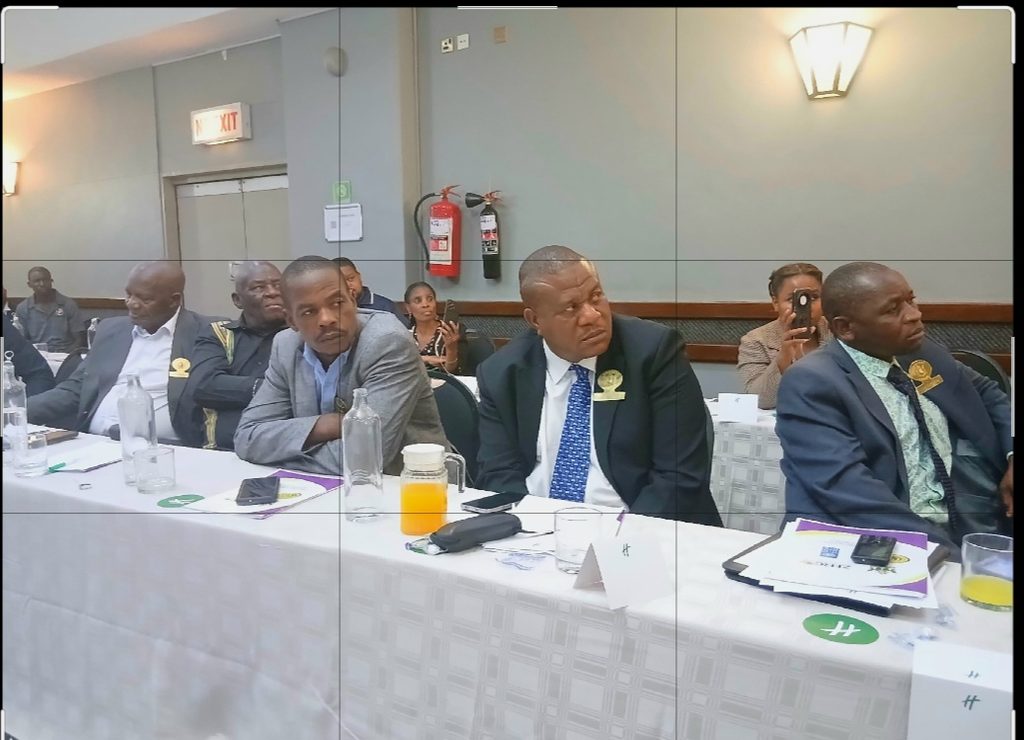
The call was made on Thursday during a community-level sensitisation dialogue on the rights and recognition of intersex persons in Zimbabwe, held at Holiday Inn in Harare.
The meeting brought together traditional leaders, government representatives, human rights institutions, development partners and members of the intersex community to discuss legal recognition, access to official documentation and ways of addressing stigma and discrimination.
ZHRC chairperson Hon Anele Ndebele said the participation of traditional leaders was essential in ensuring that intersex persons were not marginalised within their communities.
“As custodians of our customs, traditions and community values, you occupy a position of profound influence in shaping social attitudes, preserving human dignity and ensuring that no member of our communities is unjustly marginalised,” Ndebele said in his opening remarks.
“Your participation today is therefore indispensable.”
The dialogue was convened in collaboration with the Ministry of Justice, Legal and Parliamentary Affairs and the Intersex Community of Zimbabwe (ICoZ).
INTERSEX IS NOT THE SAME AS “NGOCHANI”
The dialogue also sought to address misconceptions that result in intersex persons being confused with people described as “ngochani”, a Shona term commonly associated with same-sex relationships or homosexuality.
Intersex refers to people born with variations in sex characteristics, including chromosomes, hormones, reproductive anatomy or genital characteristics, that do not fit typical medical definitions of male or female bodies. It is a biological variation and does not, in itself, determine a person’s sexual orientation or gender identity.
By contrast, “ngochani” is associated with sexual orientation and same-sex relationships. The concepts are different, and being intersex does not automatically mean that a person is homosexual.
In his opening remarks, Ndebele emphasised the distinction, saying: “This is a biological reality, not a sexual orientation.”
He said misconceptions had contributed to intersex persons being misunderstood, stigmatised and excluded, affecting their dignity, access to documentation and enjoyment of fundamental rights.
Being intersex is not evidence of wrongdoing, misconduct or a moral failing. The dialogue sought to promote accurate information, respect for human dignity and fair treatment of intersex persons.
LEGAL RECOGNITION AND OFFICIAL DOCUMENTS
A key issue at the dialogue was the need to address legal and administrative barriers affecting intersex persons, particularly in obtaining official documentation.
The discussion included the question of an appropriate sex marker in official documents, such as birth certificates, national identity cards and passports.
Ndebele said the issue required careful consideration and constructive engagement among the relevant stakeholders.
“Today’s discussion on recognition, including the question of an appropriate gender marker in official documents, must be approached with care, openness and mutual respect,” he said.
He emphasised that the meeting was not intended to pre-empt government decisions, but to deepen understanding, hear the experiences of intersex persons and contribute to ongoing consultations.
The ZHRC has previously engaged with challenges affecting intersex persons through its national inquiry into access to documentation and subsequent advocacy initiatives.
Ndebele welcomed the Government’s ongoing research, consultations and consideration of possible legal and policy reforms.
“Our shared task is to ensure that constitutional guarantees of dignity, equality and non-discrimination translate into practical protection for all Zimbabweans,” he said.
The pursuit of legal recognition also concerns access to public services, equal treatment and appropriate healthcare, alongside protection from discrimination.
CHIEFS KEY TO COMMUNITY ACCEPTANCE
Traditional leaders were identified as important partners in improving awareness and addressing misconceptions at community level.
Their influence in local administration and community affairs places them in a position to help families understand intersex characteristics and access relevant services, including birth registration and civil documentation.
Ndebele said traditional leaders could play an important role in promoting compassion and preventing the marginalisation of intersex persons.
He urged them to “help dispel misconceptions, encourage compassion and guide communities towards practices that are fair, humane and inclusive”.
The dialogue sought to strengthen the capacity of chiefs and other duty-bearers to respond to questions affecting intersex persons, particularly in rural and hard-to-reach communities where access to accurate information may be limited.
CULTURE AND HUMAN RIGHTS
Ndebele also addressed the relationship between Zimbabwe’s cultural heritage and the protection of intersex persons, saying the two should not be treated as incompatible.
“Our traditions and our Constitution need not be presented as opposing forces,” he said.
He added that cultural heritage was enriched when communities protected the dignity and wellbeing of every person.
“Ultimately, this is not a call to abandon our culture. It is a call to ensure that our cultural values continue to serve their highest purpose: preserving human dignity, strengthening social cohesion and leaving no one behind,” Ndebele said.
His remarks placed traditional leadership at the centre of efforts to improve understanding while emphasising the importance of constitutional guarantees of dignity, equality and non-discrimination.
GLOBAL AND AFRICAN CONTEXT
Intersex recognition is also a human rights issue being addressed internationally.
A widely cited estimate by researchers Blackless and colleagues suggests that up to 1.7 percent of the population may have intersex traits, although estimates vary according to the definitions and characteristics used. The figure provides an indication of the potential scale of intersex variations globally, rather than a precise count of people who identify as intersex or require particular legal arrangements.
In Africa, the African Commission on Human and Peoples’ Rights adopted Resolution 552 in March 2023, calling on states to promote and protect the rights of intersex persons.
The resolution addresses discrimination, access to healthcare and personal medical information, and appropriate legal and administrative procedures for recognition in official documentation.
Some African countries have taken steps towards recognition. Kenya included an intersex category in its 2019 national census and has introduced legal provisions addressing intersex children. South Africa also has legislation addressing changes to sex descriptions and sex status, including matters relevant to intersex persons.
However, legal frameworks and their implementation vary across the continent. Progress in civil registration does not necessarily mean that all barriers to equal treatment, healthcare and protection from discrimination have been removed.
These developments provide regional context for Zimbabwe’s ongoing discussions on how its laws, registration systems and public institutions can better accommodate intersex persons.
FROM DIALOGUE TO PRACTICAL ACTION
The Harare meeting sought to move beyond awareness-raising by identifying community barriers and establishing channels for continued engagement.
Its objectives included sensitising chiefs and other duty-bearers on intersex characteristics and human rights concerns, addressing misinformation and establishing community-level entry points for further engagement.
Expected outcomes included the identification of priority community barriers and the development of a stakeholder action matrix to improve coordination and follow-up.
Ndebele urged participants to listen to the experiences of intersex persons while respecting the concerns of traditional leaders and working with the Government towards practical solutions.
“Let us listen to the intersex community, respect the concerns of our traditional leaders, and work collaboratively with Government towards practical, lawful and sustainable solutions,” he said.
For Zimbabwe’s intersex community, the broader objective is meaningful legal recognition and protection in everyday life, including access to identity documents and public services without discrimination.
The challenge now is to translate dialogue into practical measures, sustained community education and appropriate legal and policy responses that protect the dignity and rights of intersex persons across Zimbabwe.