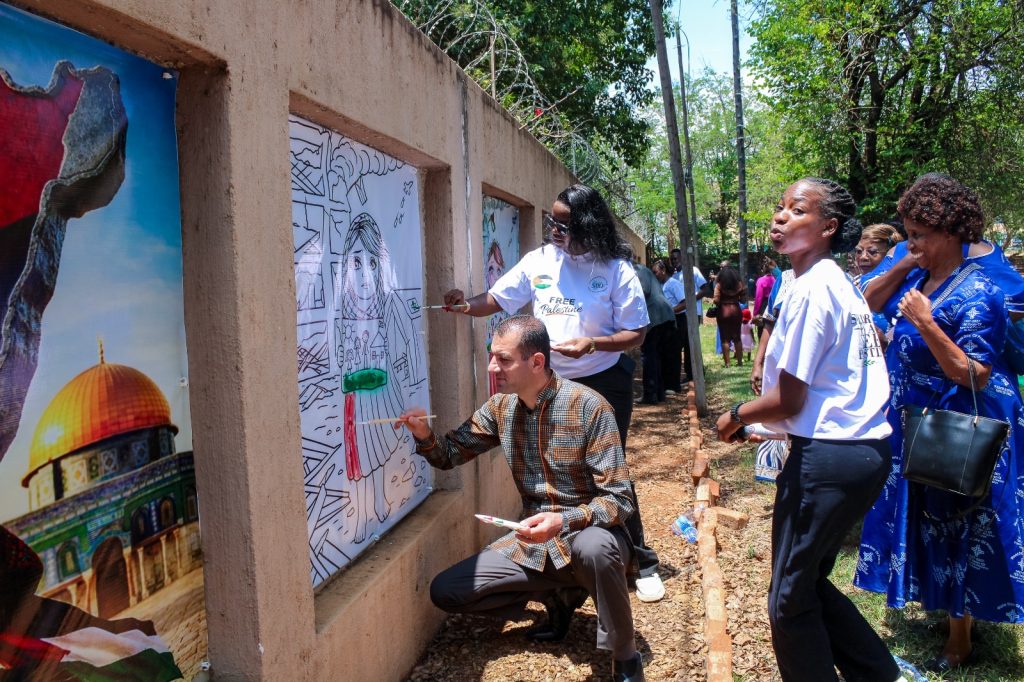
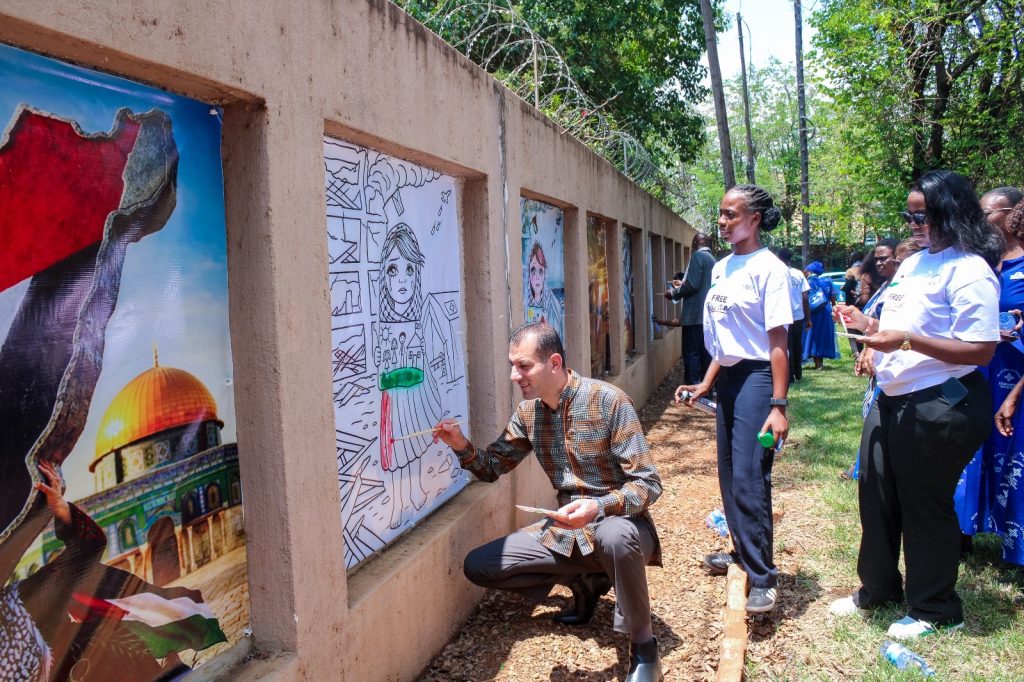
Ambassador Tamer Almassri participating in the painting of art outside the Palestine Embassy
By George Swarei
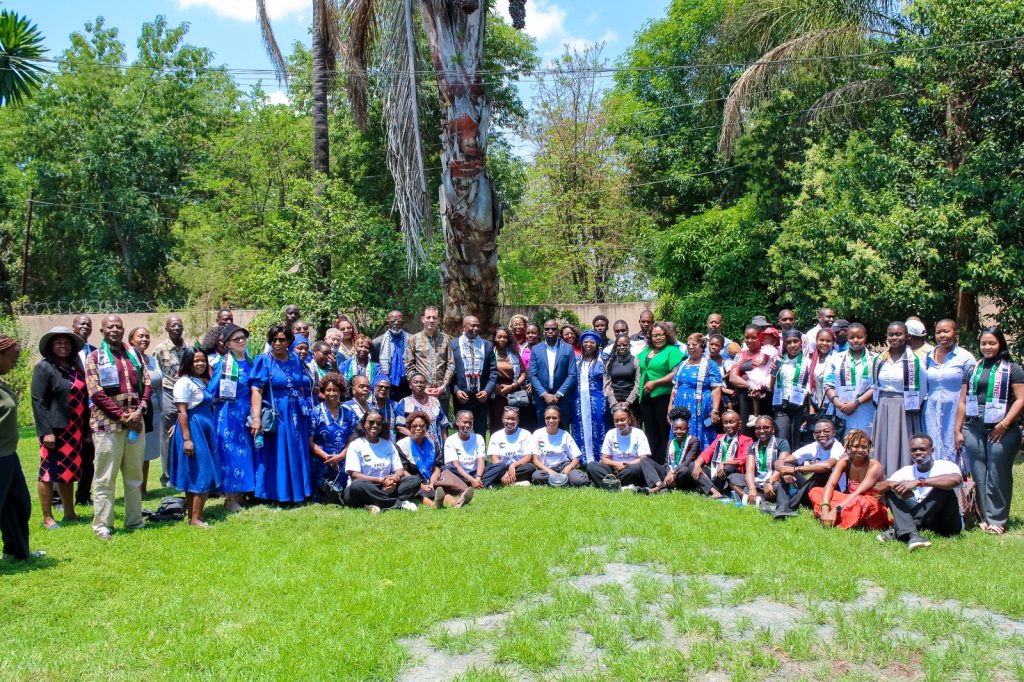
Churches, civic organisations and well-wishers unite in a collective call for humanity, justice and peace.
The Southern African Young Diplomats (SAYD) spearheaded a solidarity initiative in support of the Palestinian people, bringing together churches, civic organisations, young diplomats, diplomats and other well-wishers in a collective expression of concern over the humanitarian situation in Palestine.
Held at the Embassy of the State of Palestine in Zimbabwe, the initiative coincided with the International Day of Solidarity with the Palestinian People, providing a platform for participants to reaffirm their commitment to human dignity, international solidarity, the protection of civilians and respect for international law.
The gathering brought together people from different backgrounds and institutions, united by a common message that the suffering of ordinary civilians, particularly women and children, should never be met with indifference.
Addressing the gathering, Palestinian Ambassador to Zimbabwe, Dr Tamer Almassri, expressed gratitude to the participating organisations and individuals for standing with the Palestinian people during what he described as a prolonged period of Israeli occupation, violence and humanitarian suffering.
The Ambassador paid tribute to young people for using their voices to draw international attention to the Palestinian situation, saying their involvement in solidarity initiatives over the past three years had demonstrated the important role of the younger generation in advocating for justice and accountability.
He said the Palestinian people were counting on the younger generation to remain vocal, informed and responsible in challenging violations of international law and the principles enshrined in the United Nations Charter.
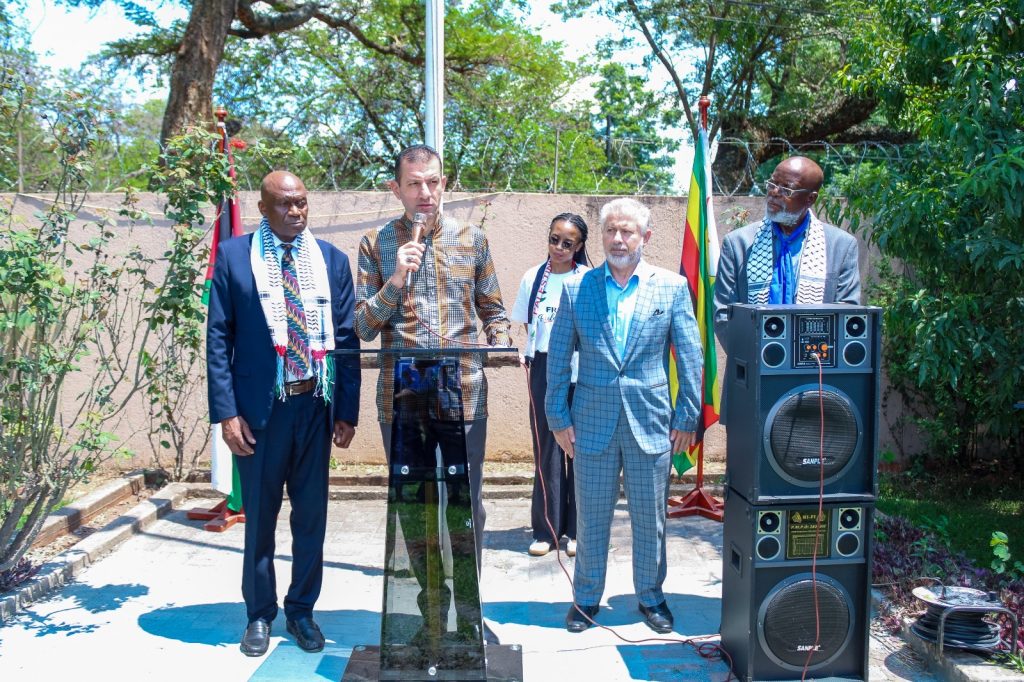
Dr Tamer Almassri highlighted the devastating humanitarian consequences of the conflict in Gaza and the occupied Palestinian territories, citing deaths, injuries, widespread destruction and restrictions on humanitarian assistance. He also raised concerns about the treatment of Palestinian detainees and what he described as the international community’s failure to ensure accountability.
The Ambassador expressed concern over what he characterised as international double standards in the application of international law, particularly in relation to the work of international judicial institutions and efforts to hold those responsible for alleged violations accountable.
Drawing parallels with Zimbabwe’s colonial history and South Africa’s struggle against apartheid, Dr Tamer Almassri said the experiences of Southern African people should inspire solidarity with Palestinians in their quest for freedom, dignity and self-determination.
He expressed the conviction that systems founded on oppression and discrimination could not endure indefinitely, pointing to the eventual collapse of colonial rule in Southern Rhodesia and apartheid in South Africa.
Adding his voice to the solidarity calls, Zimbabwe Institute of Diplomacy Chairperson, Vova Abednigo Chikanda, reaffirmed Zimbabwe’s enduring solidarity with Palestine, declaring that the country’s support for the Palestinian cause would not diminish.
“We are always here for Palestine, and we will never tire. This is a very special day, for there must be justice somewhere,” Chikanda said.
He called on the international community to intensify efforts towards securing peace and justice for Palestinians, making a special appeal to the United States of America to allow reason and diplomacy to prevail.
Addressing the humanitarian crisis in Gaza, Chikanda questioned how the world could continue with its daily routines while thousands of children were dying and communities were being devastated by the conflict.
He also appealed to the United Nations Security Council to exercise its mandate in advancing peace and justice, stressing that the Palestinian question required meaningful international intervention.
“To the United Nations, please. To the UN Security Council, guide our collective will towards peace and justice. Palestine must be free,” he said.
Chikanda further acknowledged Zimbabwe’s longstanding political and diplomatic support for Palestine, commending President Emmerson Dambudzo Mnangagwa for supporting the Palestinian struggle.
He recalled the country’s historical relationship with Palestine under the late former President Robert Mugabe, whom he described as a great friend of the late Palestinian leader Yasser Arafat. Chikanda also recounted his personal encounter with Arafat, describing it as a memorable experience.
Drawing on the shared liberation histories of Southern Africa, he invoked the legacy of the late South African President Nelson Mandela, recalling the widely associated sentiment that freedom and justice cannot be complete while the Palestinian people remain without their own freedom.
Chikanda also commended the young diplomats for organising the solidarity gathering, expressing confidence that the younger generation would sustain the commitment to supporting the Palestinian people.
“I thank young people, young diplomats, for my will is read in your hearts. I know I can rest my case and say that you will continue the struggle of supporting the people of Palestine,” he said.
A key feature of the solidarity initiative was the participation of the Southern African Young Diplomats, a youth-led organisation committed to equipping and empowering young people with practical knowledge and skills in diplomacy, international relations, international law and global governance.
Speaking on behalf of the organisation, SAYD Dean of Diplomats, Tadiwanashe Gavaza Karidza, said solidarity with Palestine went beyond words, emphasising that every person, irrespective of their place of birth, deserved the right to live in peace, access education, pursue their dreams and build a future without fear.
“Our solidarity with Palestine goes beyond words. It is a recognition that every person, regardless of where they are born, deserves the right to live in peace, to access education, to dream, and to build a future without fear,” she said.
She added that young people had a responsibility to remain informed and conscious of the international challenges confronting their generation while actively contributing to shaping a more just and peaceful world.
“Solidarity is not simply about standing with people when the world is watching; it is about refusing to become indifferent when humanity is at stake,” Karidza said.
SAYD Founder and President, Silethubuhle Moyo, said the organisation’s participation reflected its commitment to promoting international solidarity, humanitarian awareness, dialogue and the principles of international law, particularly among young people.
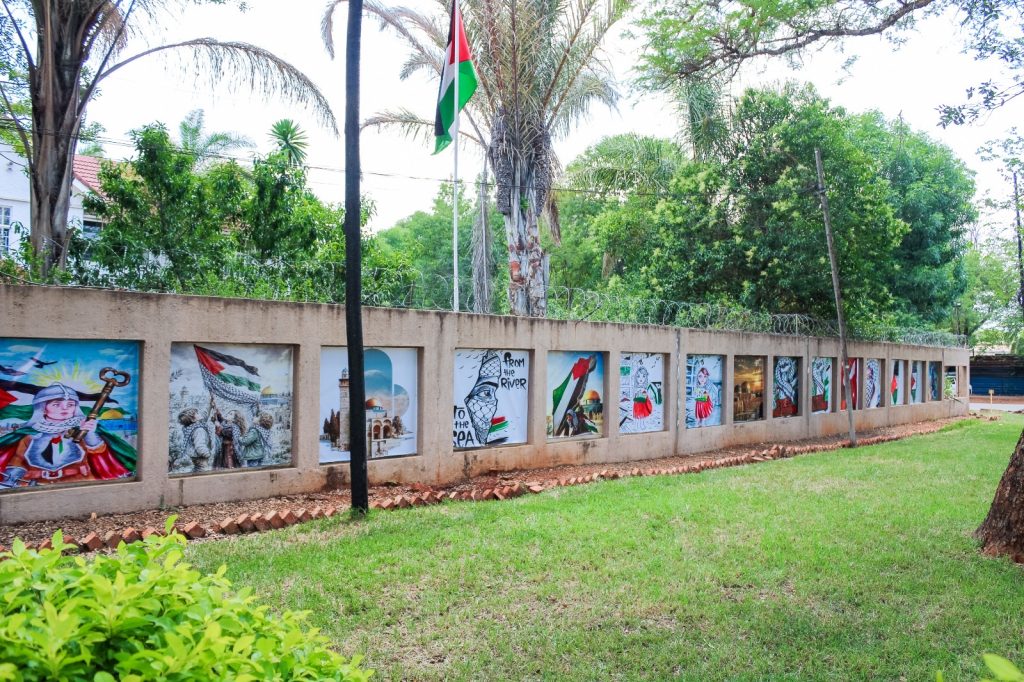
Moyo said one of SAYD’s major contributions to the programme was facilitating an art wall at the Embassy, using creative expression as a means of communicating the realities of Palestine and encouraging public engagement with the cause.
The art initiative provided participants, particularly young people, with an opportunity to express solidarity beyond formal speeches and diplomatic discussions. The artworks carried themes of hope, humanity, resilience and the importance of peace.
She said art offered an accessible and powerful platform through which people could communicate their concerns, reflect on the humanitarian situation and demonstrate solidarity with communities experiencing hardship.
The participation of churches, civic organisations and other well-wishers further demonstrated the broad-based nature of the initiative, bringing together different voices in recognition of the importance of compassion, human dignity and collective responsibility.
The gathering also underscored the role of youth-led organisations in complementing traditional diplomatic engagements by creating opportunities for public participation, education and meaningful dialogue on international affairs.
For SAYD, the initiative was part of its broader mandate to cultivate a generation of informed and globally conscious young leaders capable of contributing meaningfully to regional and international affairs.
Beyond the speeches and artistic expressions, the solidarity gathering carried a wider message: that the pursuit of peace, justice and human dignity requires collective responsibility, sustained engagement and a willingness to speak out against human suffering wherever it occurs.
The convergence of diplomatic representatives, churches, civic organisations, young people and other well-wishers demonstrated that solidarity with Palestine extends beyond political institutions. It is also rooted in communities, faith, shared historical experiences and the universal conviction that every human being deserves dignity, freedom and peace.
As the world marks the International Day of Solidarity with the Palestinian People, the gathering in Harare served as a reminder that solidarity is not confined to diplomatic institutions or political declarations. It is also expressed through communities, faith-based organisations, civic movements and young people who choose to stand for humanity.
The message from the young diplomats and their partners was clear: humanity must never be compromised by indifference, and the aspirations of the Palestinian people for dignity, freedom and lasting peace deserve continued international attention.
For the organisers and participants, the gathering was more than a commemorative event. It was a renewed pledge that the voices calling for peace, justice and Palestinian self-determination will not fall silent.