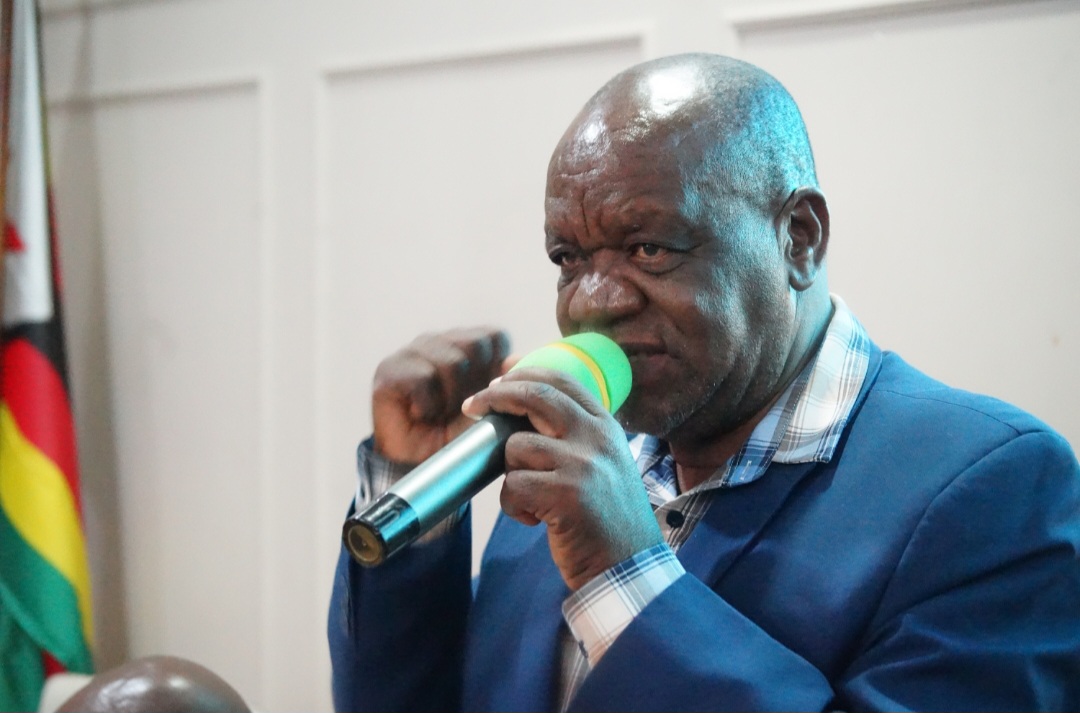
By Dickson Bandera
Amid intensified efforts to strengthen monitoring and evaluation systems, Zimbabwe on Thursday launched the Methodology for Assessing Procurement Systems (MAPS), a landmark initiative designed to enhance transparency, efficiency, and accountability in public procurement.
The program aims to align government procurement processes with international standards, ensuring fair competition and the prudent use of public resources.
For years, procurement in Zimbabwe has faced challenges of leakages and inefficiencies, prompting wide-ranging reforms by government to restore integrity and public confidence in the system.
Procurement Regulatory Authority of Zimbabwe (PRAZ) Chief Executive Officer, Dr. Clever Ruswa, emphasized the centrality of procurement to the country’s economic aspirations under Vision 2030.
“Zimbabwe is a nation with a bold vision, that of becoming a prosperous and empowered upper-middle-income society by 2030. At the heart of this transformation lies public procurement reform,” Dr. Ruswa said.
He noted that reforms began in 2017 with the enactment of the Public Procurement and Disposal of Public Assets (PPDPA) Act, which established PRAZ, decentralized procurement responsibilities, created Procurement Management Units across all Ministries, Departments, and Agencies, set up the Special Procurements Oversight Committee (SPOC), and introduced mechanisms for appeals and reviews.
MAPS, he explained, provides a globally recognized framework for monitoring procurement from planning through to contract execution, underpinned by fairness, transparency, and efficiency.
“MAPS is our answer. It is a collaborative, inclusive methodology designed to converge diverse perspectives, identify gaps and inefficiencies, align our practices with international standards, and foster trust and transparency,” Dr. Ruswa said, stressing that the initiative is focused on constructive improvement rather than blame.
PRAZ has already recorded notable achievements: training over 12,000 procurement officers and bidders, reviewing more than 7,500 special procurements through SPOC, conducting over 300 institutional visits, generating 30,000 reports for procuring entities, and processing more than 100 appeal cases. In 2023, PRAZ also launched the electronic Government Procurement (eGP) system, providing a digital foundation for transparent and auditable procurement.
President Mnangagwa, during the eGP launch in October 2024, underscored the importance of reducing corruption by minimizing human intervention and ensuring all interactions are traceable. Since its rollout, the eGP platform has expanded participation, reduced manual processes, and improved transparency—laying the groundwork for MAPS to integrate systematic Monitoring and Evaluation (M&E) into procurement.
Using the parable of the blind men and the elephant, Dr. Ruswa likened procurement to a system where stakeholders often see only fragments, leading to incomplete perspectives.
“Together, we can uncover the full picture of our procurement landscape, agree on actionable priorities, and reignite the momentum for reform. Reform is not a destination but a continuous journey. Let MAPS be our compass,” he said.
Looking ahead to 2030, Zimbabwe envisions a procurement system that is modern—leveraging digital tools to empower marginalized groups; sustainable—integrating environmental and social responsibility; and inclusive—ensuring meaningful participation from all stakeholders.
With the backing of the African Development Bank, MAPS is expected to strengthen public trust, guarantee efficient use of resources, and deliver tangible socio-economic benefits, including improved infrastructure and better public services.