
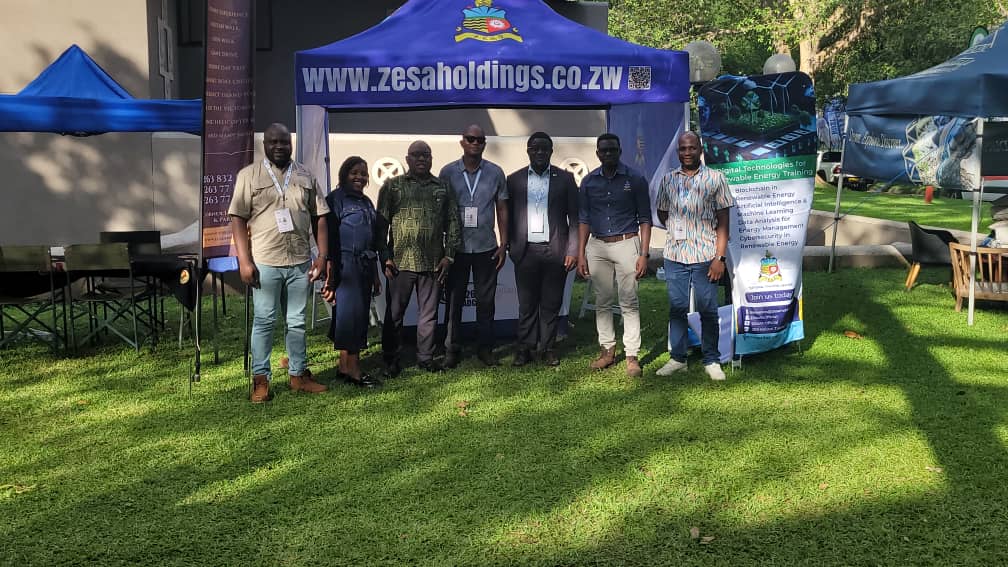
ZESA NTC Officials at their stand during the SADC Sustainable Energy Week Conference
By Brenda Mazhambe
VICTORIA FALLS – Zimbabwe’s power utility, Zimbabwe Electricity Supply Authority (ZESA), has intensified its transition to clean energy by introducing cutting-edge renewable energy training programmes anchored in digital technologies. The programmes, offered by the ZESA National Training Centre (NTC), are open to both ZESA staff and any other prospective participants seeking to build careers in the energy and power sector.
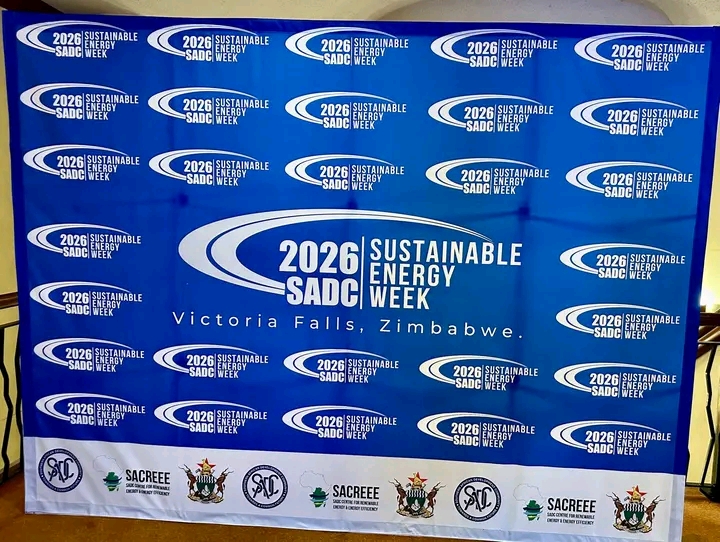
The ZESA National Training Centre, which delivers training across three main campuses, is currently showcasing its diverse portfolio of programmes at the ongoing SADC Sustainable Energy Week in Victoria Falls.
Leading the institution’s presence at the exhibition are Mr Mhango, the Group Training and Development Manager, and Mr Tafadzwa Chipoyera, a Training Engineer—two highly respected professionals whose expertise and commitment are instrumental in positioning the ZESA National Training Centre as a hub of excellence in energy training and innovation.
They are supported by a team of dedicated officers who are engaging stakeholders with a high level of professionalism, effectively showcasing the institution’s capabilities and programmes.
The suite of specialised programmes—designed to equip professionals with essential skills for the rapidly evolving energy sector—has drawn strong interest from delegates, with officials providing detailed insights into the courses on offer.
Human capital development remains a cornerstone of Zimbabwe’s National Development Strategy 2, which feeds into Vision 2030, the country’s ambitious roadmap to achieve upper-middle-income status. ZESA is actively aligning with this vision through a robust and forward-looking training framework.
Mr Chipoyera said ZESA’s training is delivered through three flagship centres: the National Training Centre in Belvedere, Harare, the Bulawayo Training Centre at Belmont Kopje, Bulawayo and the Kariba Specialist Training Centre in Kariba. Together, these campuses equip Zimbabwe and the region with a skilled workforce capable of supporting both conventional and renewable energy systems.
By investing in skills development, ZESA is positioning itself not only as a power supplier but also as a strategic driver of innovation and workforce development in Southern Africa’s transition to sustainable energy.
Central to the skills drive is the integration of digital innovation into renewable energy systems, with flagship courses including Artificial Intelligence and Machine Learning, Blockchain in Renewable Energy, Data Analytics for Energy Management, and Cybersecurity in Energy Infrastructure.
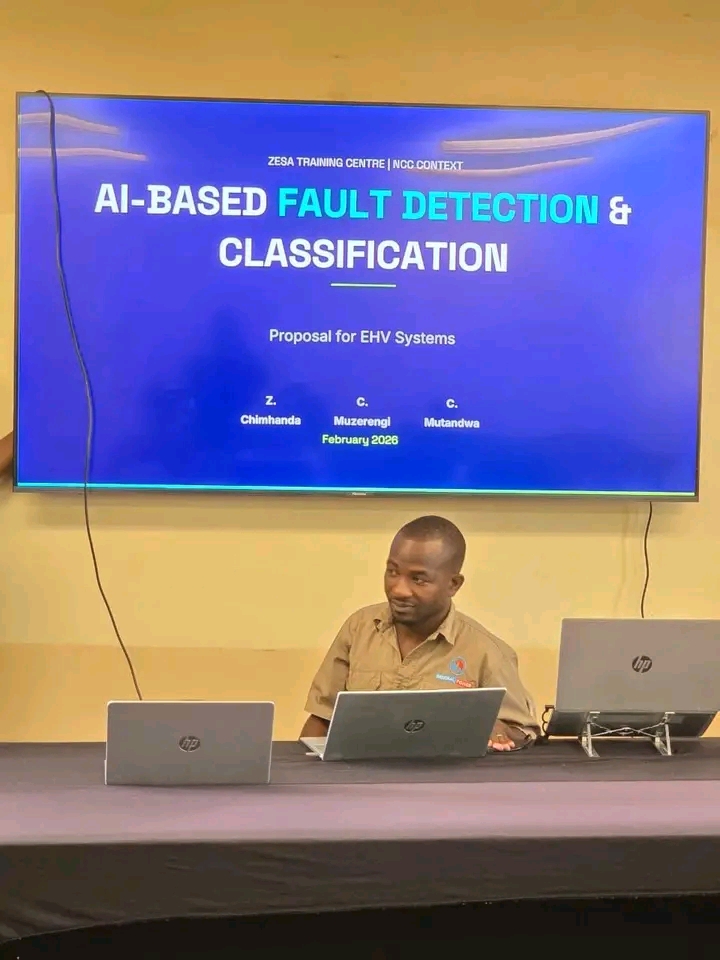
According to information presented at the exhibition, the Artificial Intelligence and Machine Learning module — a key focus area — introduces participants to smart energy applications such as predictive maintenance and energy optimisation, supported by hands-on projects using real-world scenarios.
The Blockchain in Renewable Energy course explores peer-to-peer energy trading and smart contracts, signalling a shift towards decentralised energy systems, while Data Analytics for Energy Management equips trainees with tools to analyse consumption patterns, monitor system performance, and enhance decision-making.
In a sector increasingly vulnerable to digital threats, the Cybersecurity in Renewable Energy module focuses on safeguarding infrastructure, addressing cyber risks, and ensuring compliance with international standards.
Mr Chipoyera said the programmes are designed to bridge the skills gap in Zimbabwe’s energy transition by combining theory with practical training delivered by industry experts.
The training initiative also offers flexible learning options, including in-person, online and hybrid formats, alongside certification aimed at improving career prospects in the fast-growing renewable energy industry.
Zimbabwe is increasingly turning to renewable energy, particularly solar, to complement traditional power sources such as Kariba and Hwange’s coal powered power stations, amid rising demand and climate-related challenges. In this context, ZESA’s investment in human capital development is as a strategic move to support national and regional energy goals.
As the region accelerates towards sustainable energy, the utility’s focus on digital technologies in renewable training signals a decisive shift towards smarter, more resilient power systems.