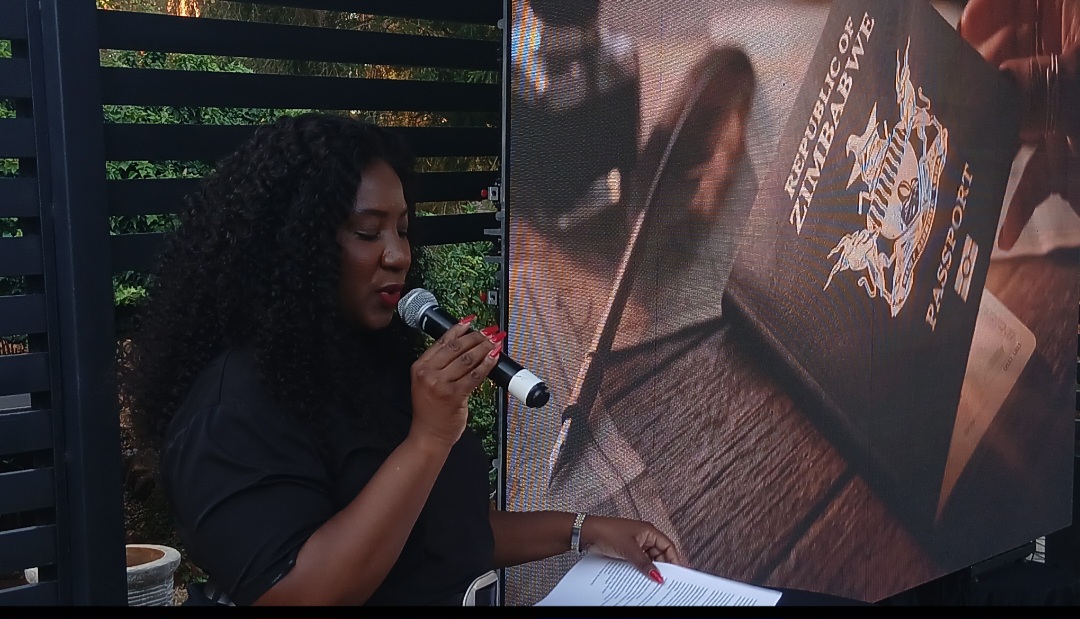
Fine & Country Zimbabwe chief executive officer Karen Nyenga
By Staff Reporter
HARARE — Zimbabweans buying property are being urged to strengthen due diligence before committing their money, with a new industry programme seeking to equip consumers with practical information on ownership, documentation, costs and the professionals involved in property transactions.
Fine & Country Zimbabwe on Friday launched Property Passport – Your Passport to Home, an eight-week programme designed to make the property market easier for consumers to understand while exposing prospective buyers to the different stages of a property transaction.
The initiative comes against the backdrop of a property market in which consumers can be required to navigate land acquisition, development agreements, financing, conveyancing, valuation, construction and property management, often involving several different service providers.
For buyers, both those investing remotely from outside Zimbabwe, and those locally, gaps in knowledge can make it difficult to establish exactly what they are purchasing, whether an opportunity is legitimate and what obligations and costs accompany the transaction.
The initiative will take the form of a property reality show to be streamed on YouTube, combining competition and entertainment with practical property education. The format is intended to take viewers through different aspects of the property journey as contestants engage with professionals and businesses involved in real estate, while helping consumers understand issues they may encounter when buying, developing or investing in property.
Fine & Country Zimbabwe chief executive officer Karen Nyenga said Property Passport was intended to address that information gap by putting consumers in direct contact with professionals across the property value chain.
“Property Passport is an ambitious eight-week property experience designed to bring the Zimbabwean property market closer to the people,” Nyenga said.
“Our objective is straightforward: to educate, entertain, engage and inspire Zimbabweans everywhere to participate more confidently in real estate.”
A key focus of the programme will be helping prospective buyers ask the right questions before making financial commitments.
Nyenga said consumers needed to understand the documentation associated with a transaction, establish the legitimacy of an opportunity and distinguish between different forms of property acquisition.
“How do I know what I am buying? How do I establish whether an opportunity is legitimate? What documentation should I expect?” she said.
“What is the difference between buying land, buying a completed property and buying into a development? What professionals should be involved? What costs should I anticipate beyond the advertised purchase price?”
The programme will bring together estate agents, property developers, financial institutions, legal practitioners, conveyancers, valuers, architects, engineers, builders and suppliers.
The involvement of multiple professionals is significant because a property purchase is rarely confined to the advertised price of a house, stand or development.
Depending on the transaction, consumers may have to deal with legal and conveyancing processes, valuation, financing, construction costs, professional fees and other charges.
Nyenga said Property Passport would seek to explain how these different components fit together from the consumer’s perspective.
“The customer does not experience these industries in isolation. The customer experiences one property journey,” she said.
“And Property Passport seeks to make that journey easier to understand.”
The programme will cover residential, commercial, industrial, agricultural and hospitality property, and will examine the journey from acquiring land through construction and eventual ownership.
It will target both first-time buyers and experienced investors, as well as Zimbabweans in the diaspora seeking to acquire property or invest in developments in the country.
For first-time buyers, the programme will seek to simplify property terminology and processes that can make transactions appear more complicated than they are.
“For the person who has never bought property before, we want to make the language less intimidating,” Nyenga said.
“For the experienced investor, we want to surface opportunities, conversations and market intelligence worth paying attention to.”
Nyenga also encouraged consumers to take a more questioning approach when considering property opportunities.
“Ask the difficult questions. Challenge the assumptions. Compare. Investigate. Seek professional advice,” she said.
“Property is too important to be approached casually.”
The consumer-protection message is particularly relevant to Zimbabweans in the diaspora, who may be considering property investments without being physically present to inspect developments, engage service providers or follow transactions themselves.
Property Passport will therefore provide a platform for consumers to hear directly from professionals involved in the different stages of property ownership and investment.
Nyenga said the company’s role should extend beyond presenting properties for sale.
“Our role is not simply to put a property in front of someone and say, ‘Here it is.’ Our role is to say: Here is the opportunity. Here are the questions. Here are the considerations. Here are the professionals. Here is the process. Now let us help you navigate it.”
The eight-week programme is expected to feature property opportunities and developments while providing educational discussions around ownership, investment, construction and related services.
For consumers, its central proposition is straightforward: understand the transaction, establish what is being purchased, identify the professionals involved and understand the full cost before committing funds.
In a market where property represents a substantial financial commitment for many households and investors, greater access to understandable information could help consumers make more informed decisions and identify potential problems before completing transactions.